This book was the primary authority on what was
proper, beautiful, efficient in all aspects of mid-19th-century
interior design. Originally published in 1868. Over 100
illustrations. More Books
Mark Twain
is one of only a few All-American writers. Unlike many
contemporary writers and those who followed him, he
wrote for the common man. He traveled and wrote about
places he visited with a sense of humor. In his books
and other writings, he illustrated Victorian life in
both fact and fiction. To learn more, read “Mark
Twain’s America.”
A Furniture Re-Awakening by Bob Brooke
The Victorian Era was an age of revivals.
Of the seven different revival styles of furniture that proliferated
from the 1860s to the 1880s, the Renaissance Revival style, in use from
1855 to 1875, was one of the most popular. Renaissance Revival was an
architectural style that easily made the transition from the custom,
one-of-a-kind furniture shops in New York and Philadelphia to the
mass-production factories of the Midwest.
The Renaissance was a European period of history and cultural movement
taking place at the end of the Late Middle Ages and the beginning of the
early modern era. It is variously defined as lasting from the 14th
century to the 17th or, more narrowly, as covering only the 15th and
16th centuries. It was characterized by the European rediscovery and
revival of the literary, philosophical, and artistic achievements of
classical antiquity. Associated with great change in art, architecture,
politics, literature, exploration and technology, the Renaissance was
first centered in the Republic of Florence, then spread to the rest of
Italy and later throughout Europe.
This significant cultural rebirth in Europe, emphasizing humanism and
the arts, influenced designers and architects to revive the grandeur of
early styles, well into the 19th century.
Introduced in the early 1850's as a counter balance to the flowery
Rococo Revival, Renaissance Revival borrowed elements from just about
every furniture period since the 1400's. Originating in the French court
of Napoleon III, the style soon took on a life of its own.
Furniture makers built pieces that consisted of an eclectic mix of
14th-century Renaissance, Neoclassical and 16th-century French
derivation, based on a rectangular form with various embellishments.
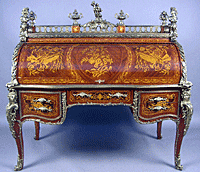
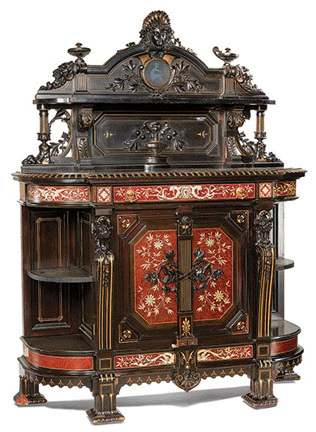
While pieces of this style of furniture came in a myriad of shapes and
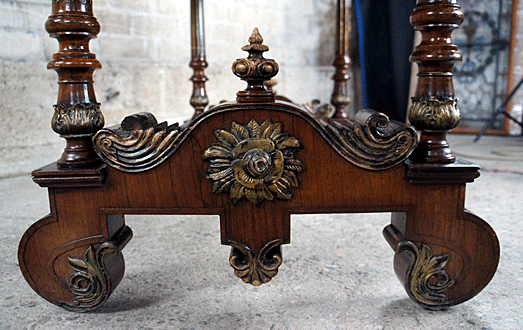
sizes, they generally featured turned and fluted legs, raised or inset
burled panels, heavily carved finials and crests, inset marble tops, and
cookie-cut corners. On many mass-produced pieces, manufacturers added
black and gold incising dn banding, and on finer, one-of-a-kind models,
marquetry inlay and bronze or brass mounts. Most pieces of Renaissance
Revival furniture were very large—ideal for the Victorian "more is more"
philosophy. Makers of finer pieces preferred to use walnut, as it had
been in the 16th century. And that was the most accurate thing about
this revival style, which also borrowed heavily from the 17th-century
Baroque and the earlier Gothic periods.
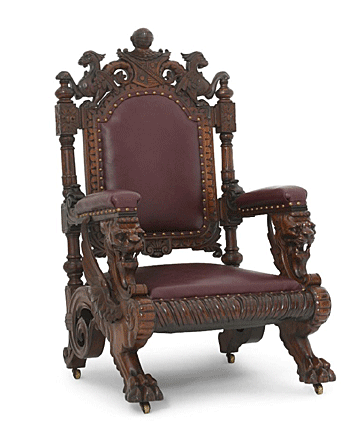
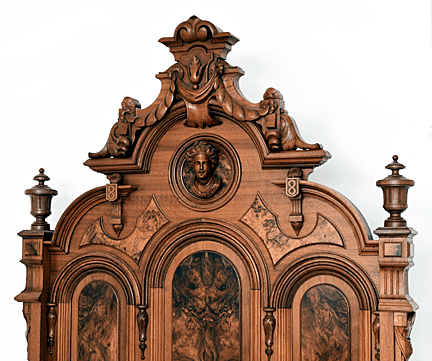
Prominent Renaissance and Neoclassical motifs such as columns,
pediments, cartouches, rosettes, and carved masks, as well as plaques in
porcelain, bronze, and mother-of-pearl became common types of
decoration. Factory pieces had turned or cutout parts while finer
examples featured carving or elaborate inlay of ebony and other exotic
woods.
Before 1870 nearly all fine Renaissance Revival furniture came from
small cabinetmaker shops in the East that made pieces to order. As the
style gained popularity, furniture factories in the Midwest figured out
how to mass produce the style for the Middle Class market. While some
still used walnut, many chose to use cheaper ash or pine, painting it to
look more high-style. The Renaissance Revival styles of the 1860s and
1870s marked the first time furniture makers used fine designs for
mass-produced furnishings.
Large Midwestern factories, centered primarily in Grand Rapids,
Michigan, manufactured pieces with turned and cut elements that could be
produced more readily in volume and at lower cost. A few of the larger
companies in Grand Rapids had committed to using the latest technology
by the 1870's, among them Berkey & Gay, Nelson Matter and Phoenix.
Renaissance Revival became the style of the Centennial Exposition and
Grand Rapids was the star, but by that time it was already on its way
out. The overpowering bedroom sets presented by Berkey & Gay cemented
the reputation of the Grand Rapids factories as the manufacturers of
bedroom sets or "chamber suites" as they became known.
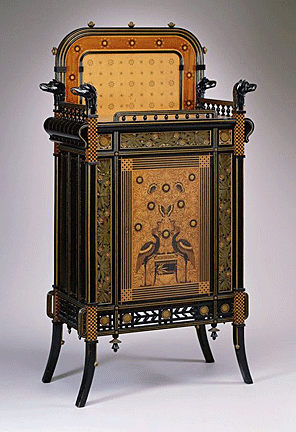
New York cabinetmakers, such as Herter Brothers, on the other hand,
produced pieces with elegant detail and elaborate inlays. They
interpreted 16th- and 17th-century designs. And their motifs ranged from
curvilinear and florid early in the period to angular and almost severe
by the end of the period. Walnut veneer panels were a real favorite in
their 1870s designs. Upholstery, usually of a more generous nature, was
also often incorporated into this design style. Ornamentation and high
relief carving included flowers, fruits, game, classical busts, acanthus
scrolls, strapwork, tassels and masks. Architectural motifs, such as
pilasters, columns, pediments, balusters and brackets, were another
prominent design feature. Makers usually employed cabriole or
substantially turned legs on their pieces.
Several types of furniture were particularly popular in the Renaissance
Revival style. Furniture makers elaborately decorated the cassone, or
marriage chest, with carvings and paintings. They also produced the
sgabello, a type of chair with a small wooden seat, supported by
ornately shaped boards.
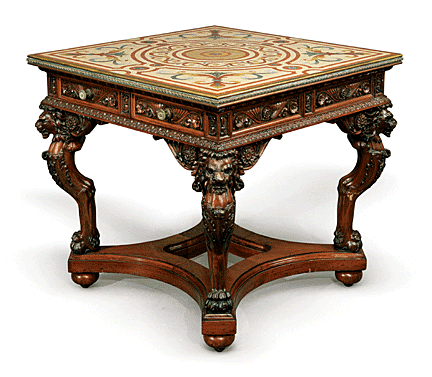
Tables were mostly rectangular, supported by carved consoles or figures,
sometimes with marble tops. And chests, commonly used for storage, came
in various shapes and often had rich ornamentation.
Renaissance Revival furniture not only reflected the aesthetics of the
original Renaissance but also adapted to the tastes and needs of
19th-century society, making it significantly important.
Pieces include intricate carvings, elaborate ornamentation, and
classical motifs, often made from high-quality woods like walnut and
oak. The style emphasized grandeur, symmetry, and historical references,
reflecting the Victorian era's fascination with earlier European
designs.
Originally, Renaissance furniture, dating to between 1400 and 1550,
featured simpler designs with a focus on architectural forms.
Renaissance Revival furniture, on the other hand, sought to interpret
the earlier 15th-century styles while reflecting Victorian tastes.
The end came to Renaissance Revival furniture when people began to
desire a return to simplicity, the antithesis of Renaissance Revival,
which embodied itself in the Arts and Crafts movement of the late 19th
and early 20th century and the resurgence of interest in American
heritage seen in the long running Colonial Revival style.
No antiques or collectibles
are sold on this site.
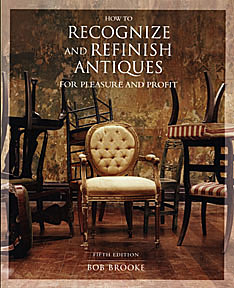
How to Recognize and
Refinish Antiques for Pleasure and Profit
Have
you ever bought an antique or collectible that was less than perfect and
needed some TLC? Bob's new book offers tips and step-by- step
instructions for simple maintenance and restoration of common antiques.
Read an
Excerpt
Auction News
Get up to the minute news of antiques auctions
around the country and the world.



























 The Victorian Era was an age of revivals.
Of the seven different revival styles of furniture that proliferated
from the 1860s to the 1880s, the Renaissance Revival style, in use from
1855 to 1875, was one of the most popular. Renaissance Revival was an
architectural style that easily made the transition from the custom,
one-of-a-kind furniture shops in New York and Philadelphia to the
mass-production factories of the Midwest.
The Victorian Era was an age of revivals.
Of the seven different revival styles of furniture that proliferated
from the 1860s to the 1880s, the Renaissance Revival style, in use from
1855 to 1875, was one of the most popular. Renaissance Revival was an
architectural style that easily made the transition from the custom,
one-of-a-kind furniture shops in New York and Philadelphia to the
mass-production factories of the Midwest.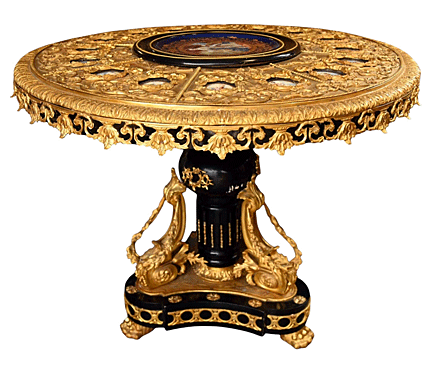
 This significant cultural rebirth in Europe, emphasizing humanism and
the arts, influenced designers and architects to revive the grandeur of
early styles, well into the 19th century.
This significant cultural rebirth in Europe, emphasizing humanism and
the arts, influenced designers and architects to revive the grandeur of
early styles, well into the 19th century. 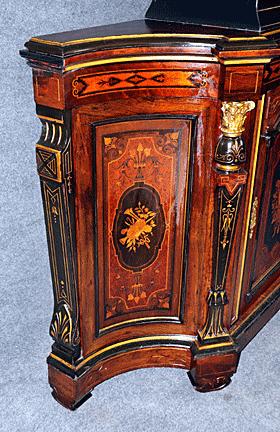 While pieces of this style of furniture came in a myriad of shapes and
sizes, they generally featured turned and fluted legs, raised or inset
burled panels, heavily carved finials and crests, inset marble tops, and
cookie-cut corners. On many mass-produced pieces, manufacturers added
black and gold incising dn banding, and on finer, one-of-a-kind models,
marquetry inlay and bronze or brass mounts. Most pieces of Renaissance
Revival furniture were very large—ideal for the Victorian "more is more"
philosophy. Makers of finer pieces preferred to use walnut, as it had
been in the 16th century. And that was the most accurate thing about
this revival style, which also borrowed heavily from the 17th-century
Baroque and the earlier Gothic periods.
While pieces of this style of furniture came in a myriad of shapes and
sizes, they generally featured turned and fluted legs, raised or inset
burled panels, heavily carved finials and crests, inset marble tops, and
cookie-cut corners. On many mass-produced pieces, manufacturers added
black and gold incising dn banding, and on finer, one-of-a-kind models,
marquetry inlay and bronze or brass mounts. Most pieces of Renaissance
Revival furniture were very large—ideal for the Victorian "more is more"
philosophy. Makers of finer pieces preferred to use walnut, as it had
been in the 16th century. And that was the most accurate thing about
this revival style, which also borrowed heavily from the 17th-century
Baroque and the earlier Gothic periods.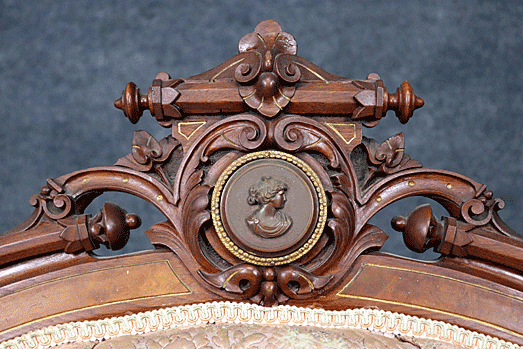
 Before 1870 nearly all fine Renaissance Revival furniture came from
small cabinetmaker shops in the East that made pieces to order. As the
style gained popularity, furniture factories in the Midwest figured out
how to mass produce the style for the Middle Class market. While some
still used walnut, many chose to use cheaper ash or pine, painting it to
look more high-style. The Renaissance Revival styles of the 1860s and
1870s marked the first time furniture makers used fine designs for
mass-produced furnishings.
Before 1870 nearly all fine Renaissance Revival furniture came from
small cabinetmaker shops in the East that made pieces to order. As the
style gained popularity, furniture factories in the Midwest figured out
how to mass produce the style for the Middle Class market. While some
still used walnut, many chose to use cheaper ash or pine, painting it to
look more high-style. The Renaissance Revival styles of the 1860s and
1870s marked the first time furniture makers used fine designs for
mass-produced furnishings.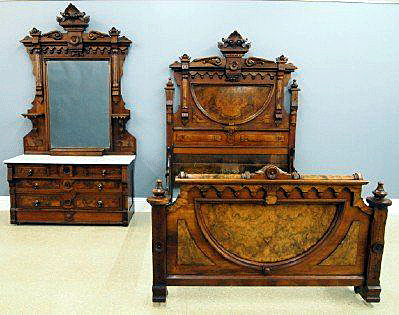
 New York cabinetmakers, such as Herter Brothers, on the other hand,
produced pieces with elegant detail and elaborate inlays. They
interpreted 16th- and 17th-century designs. And their motifs ranged from
curvilinear and florid early in the period to angular and almost severe
by the end of the period. Walnut veneer panels were a real favorite in
their 1870s designs. Upholstery, usually of a more generous nature, was
also often incorporated into this design style. Ornamentation and high
relief carving included flowers, fruits, game, classical busts, acanthus
scrolls, strapwork, tassels and masks. Architectural motifs, such as
pilasters, columns, pediments, balusters and brackets, were another
prominent design feature. Makers usually employed cabriole or
substantially turned legs on their pieces.
New York cabinetmakers, such as Herter Brothers, on the other hand,
produced pieces with elegant detail and elaborate inlays. They
interpreted 16th- and 17th-century designs. And their motifs ranged from
curvilinear and florid early in the period to angular and almost severe
by the end of the period. Walnut veneer panels were a real favorite in
their 1870s designs. Upholstery, usually of a more generous nature, was
also often incorporated into this design style. Ornamentation and high
relief carving included flowers, fruits, game, classical busts, acanthus
scrolls, strapwork, tassels and masks. Architectural motifs, such as
pilasters, columns, pediments, balusters and brackets, were another
prominent design feature. Makers usually employed cabriole or
substantially turned legs on their pieces. 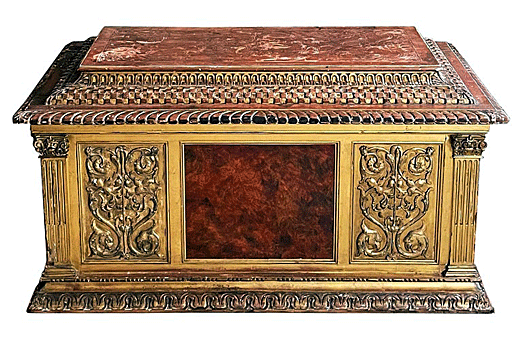
 Tables were mostly rectangular, supported by carved consoles or figures,
sometimes with marble tops. And chests, commonly used for storage, came
in various shapes and often had rich ornamentation.
Tables were mostly rectangular, supported by carved consoles or figures,
sometimes with marble tops. And chests, commonly used for storage, came
in various shapes and often had rich ornamentation.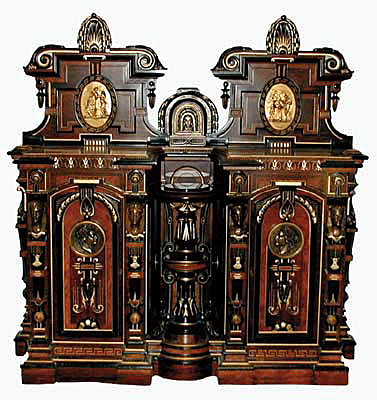 Pieces include intricate carvings, elaborate ornamentation, and
classical motifs, often made from high-quality woods like walnut and
oak. The style emphasized grandeur, symmetry, and historical references,
reflecting the Victorian era's fascination with earlier European
designs.
Pieces include intricate carvings, elaborate ornamentation, and
classical motifs, often made from high-quality woods like walnut and
oak. The style emphasized grandeur, symmetry, and historical references,
reflecting the Victorian era's fascination with earlier European
designs.