|

Here you'll find articles
on unique or little-known
antiques and collectibles.
LATEST SPOTLIGHT_________________________________
A Victorian Bedroom Necessity
by Bob Brooke
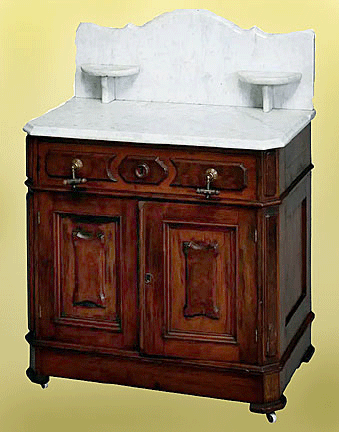 Before
the dawn of the modern bathroom, people tended to their personal
hygiene needs at a modest washstand in their bedrooms. But the
commonly known Victorian washstand has a long and varied history. Before
the dawn of the modern bathroom, people tended to their personal
hygiene needs at a modest washstand in their bedrooms. But the
commonly known Victorian washstand has a long and varied history.
It all began in ancient Greece, Philo of Byzantium, a Greek engineer
and writer on mechanics, describes a mechanism consisting of a
counterweighted spoon, supplied by a water tank, that tipped over
into a basin when full, releasing a pumice in the process. Once the
spoon had emptied, the counterweight pulled it up again, closing the
door on the pumice by the tightening string.
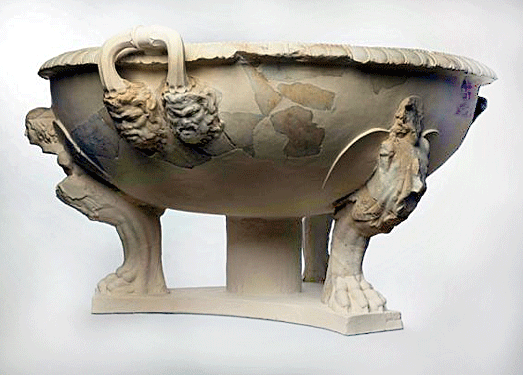
The Romans continued this washing routine using a large clay bowl
into which they poured water from a ceramic pitcher or ewer to wash
their face and hands. For more thorough cleansing, many Romans would
go to the public baths daily.
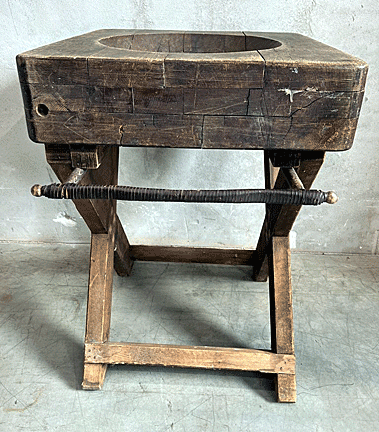 By
the Middle Ages—the period after the fall of the Roman Empire—public
baths had fallen into disuse. During the 12th century, palaces and
castles often contained one or more fixed lavatories, constructed into
the thickness of the walls. Eventually, these lavatories became portable
and by the mid 17th century, a basin frame came into common use. Until
the end of the century, the basin frame stood on a tripod stand. A
circular hole in the top held the basin and smaller ones held a soap
dish and a water bottle. Sometimes, a shelf below for the water jug held
it when the basic was in use, and a drawer or two were added below the
basin. By
the Middle Ages—the period after the fall of the Roman Empire—public
baths had fallen into disuse. During the 12th century, palaces and
castles often contained one or more fixed lavatories, constructed into
the thickness of the walls. Eventually, these lavatories became portable
and by the mid 17th century, a basin frame came into common use. Until
the end of the century, the basin frame stood on a tripod stand. A
circular hole in the top held the basin and smaller ones held a soap
dish and a water bottle. Sometimes, a shelf below for the water jug held
it when the basic was in use, and a drawer or two were added below the
basin.
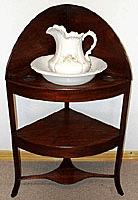 By
the 18th-century, people continued using a basin stand or basin frame.
Its direct, but remote, ancestor was the monastic lavabo, ranges of
basins of stone, lead or marble fed from a cistern, or tank.. They were
usually primitive. A trough common to all was probably more frequent
than separate basins. Very occasionally, wealthier folk washed at bronze
basins, adorned with enamels and blazoned with heraldry. By
the 18th-century, people continued using a basin stand or basin frame.
Its direct, but remote, ancestor was the monastic lavabo, ranges of
basins of stone, lead or marble fed from a cistern, or tank.. They were
usually primitive. A trough common to all was probably more frequent
than separate basins. Very occasionally, wealthier folk washed at bronze
basins, adorned with enamels and blazoned with heraldry.
Cabinetmakers produced large numbers of these stands to fit into
corners. Thomas Chippendale designed such stands in an elaborate Rococo
style, as well as in a simpler form.
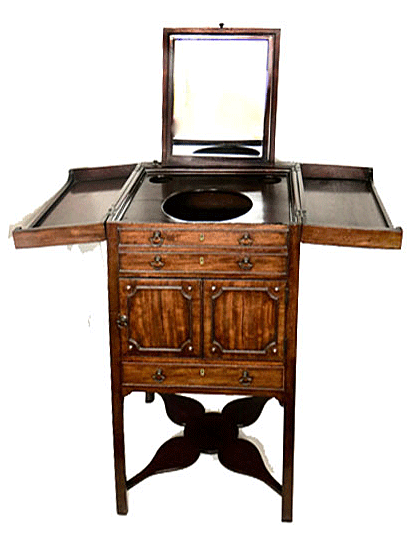 By
the end of the 18th century, the use of the same room for receiving
guests by day and for sleeping at night created a demand for multi-use
pieces of furniture.. Thus a variety of complicated combination
washstands and dressing tables were made, and fitted with mirrors and
sometimes with writing conveniences and drawers for clothes. By
the end of the 18th century, the use of the same room for receiving
guests by day and for sleeping at night created a demand for multi-use
pieces of furniture.. Thus a variety of complicated combination
washstands and dressing tables were made, and fitted with mirrors and
sometimes with writing conveniences and drawers for clothes.
In the beginning of the 19th century and the expansion of ideals of
personal cleanliness, the washstand grew in size and importance. It
acquired the form of an oblong wooden table provided, like its smaller
predecessors, with orifices for basins and fitted with a brad shelf-like
stretcher upon which the jugs were placed when they were removed from
the basins. These washstands had ample space for soap-dishes and
water-bottles. Some of these washing tables had room for two bowls for
the use of one or two persons.
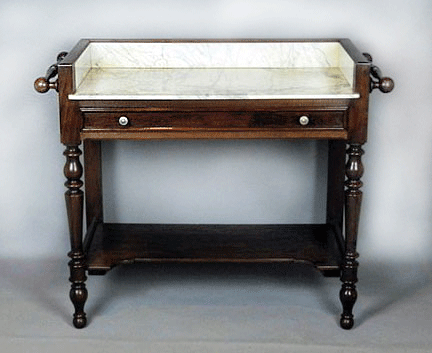
In the third quarter of the 19th century, furniture makers replaced the
wooden top of their washstands with marble tops on which the water
basins rested upon the slab, which, in the beginning were mostly white,
while later ones were made of red or other warm-tinted marble.
Styles of Washstands
 The
simple tripod washstand continued in common use for armies on the march.
The folding tripod allowed it to be set up and packed up easily for
travel. The
simple tripod washstand continued in common use for armies on the march.
The folding tripod allowed it to be set up and packed up easily for
travel.
During the Victorian Era, washstand design broadened with the many
styles of furniture being produced. In all, seven different styles
dominated the furniture market. Each had its own style of washstand.
From the 1840s on, furniture manufacturers began producing bedroom
suites, each complete with a washstand, whether open table or closed
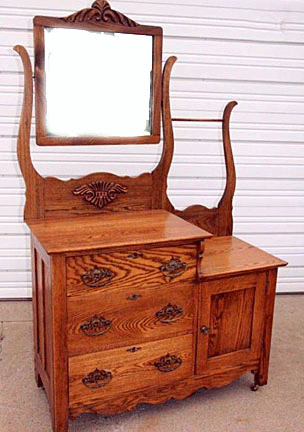
cabinet style. These ranged from simple
 chests
with a towel bar above or at the side to elaborate ones with marble tops
and large mirrors. chests
with a towel bar above or at the side to elaborate ones with marble tops
and large mirrors.
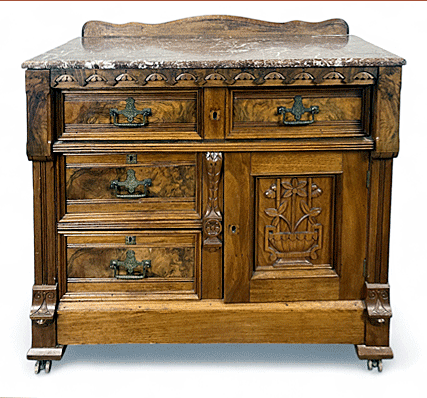
Victorian washstands were mostly machine made. The most elaborate ones
were in the Renaissance Revival style. Usually made of walnut, these
chest washstands usually had matching burl veneers, carvings, marble
tops, and fancy drawer pulls. Eastlake was another popular style. More
geometric and linear in form, Eastlake washstands had many of the same
features as the Renaissance Revival ones.
Simpler washstands in the Golden Oak style, popular in the 1890s, had
clean lines in both the chest and table forms.
<
Back to More Antique Spotlights
|