A Home for Sacred Relics
by Bob Brooke
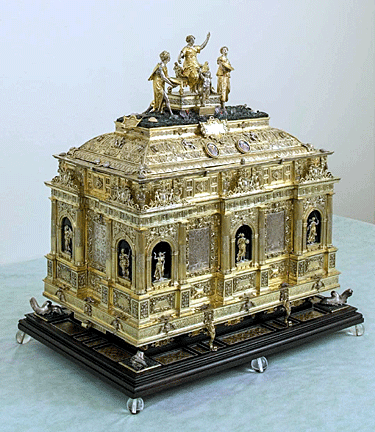 A
reliquary is a container for relics―the purported or actual physical
remains of saints—and may consist of bones, pieces of clothing, or some
objects associated with Christian saints and martyrs. A
reliquary is a container for relics―the purported or actual physical
remains of saints—and may consist of bones, pieces of clothing, or some
objects associated with Christian saints and martyrs.
What Are Relics?
Relics—bits of bone, clothing, shoes, or dust—became popular in Western
Christianity in the Middle Ages. The cult of relics dates back to the
2nd and 3rd centuries, when the Romans persecuted and often killed
martyrs by fragmenting their bodies. The intention was to desecrate
their bodies through execution and burning. By the late 3rd to early 4th
centuries, early Christians began to revere the fragments of the martyrs
as source of spiritual power and special access to the divine. The
Second Council of Nicea in 787 decreed that to relics were necessary to
consecrate Christian altars.
 Reliquaries,
the containers that house relics, took on many forms throughout the
Middle Ages. Artisans crafted them in homage to the martyr whose remains
contained inside. They created some as ornate caskets depicting images
of the saint’s life or martyrdom, while others took the form of busts of
the saints or ornate works of glass and metal to display larger, more
intact relics, such as bones. Reliquaries,
the containers that house relics, took on many forms throughout the
Middle Ages. Artisans crafted them in homage to the martyr whose remains
contained inside. They created some as ornate caskets depicting images
of the saint’s life or martyrdom, while others took the form of busts of
the saints or ornate works of glass and metal to display larger, more
intact relics, such as bones.
Christian belief in the spiritual power of relics, the
physical remains of a holy site or holy person, or objects with which
they had contact, is as old as the faith itself and developed alongside
it. Relics were more than mementos. The New Testament refers to the
healing power of objects touched by Christ or his apostles. The body of
the saint provided a spiritual link between life and death, between man
and God:
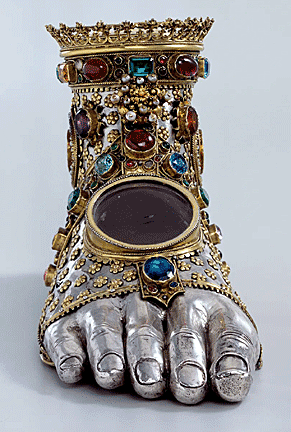 An
interesting phenomenon in reliquary art are those shaped like parts of
the human body. These gained popularity in the West in the 12th and 13th
centuries, and became known as “speaking reliquaries.” Though the shape
of the reliquary might have implied the body part beneath; yet we have
much evidence that many body-part reliquaries did not in fact contain
the bone or body part depicted, these reliquaries often didn’t contain
that body part. Instead, they represented the ritual associated with the
relic. For example, a reliquary in the shape of an arm could indicate
the blessing given by a priest or bishop. And, by the late Middle Ages,
reliquaries in the West didn’t contain body parts at all, but instead
usually included contact relics, such as bits of clothes or shoes. An
interesting phenomenon in reliquary art are those shaped like parts of
the human body. These gained popularity in the West in the 12th and 13th
centuries, and became known as “speaking reliquaries.” Though the shape
of the reliquary might have implied the body part beneath; yet we have
much evidence that many body-part reliquaries did not in fact contain
the bone or body part depicted, these reliquaries often didn’t contain
that body part. Instead, they represented the ritual associated with the
relic. For example, a reliquary in the shape of an arm could indicate
the blessing given by a priest or bishop. And, by the late Middle Ages,
reliquaries in the West didn’t contain body parts at all, but instead
usually included contact relics, such as bits of clothes or shoes.
The Origin of Reliquaries
 The
use of reliquaries became an important part of Christian practices from
at least the 4th century, initially in the Eastern Churches, which
adopted the practice of moving and dividing the bodies of saints much
earlier than the West, probably in part because the new capital of
Constantinople, unlike Rome, lacked buried saints. Christian
churches---Eastern Orthodox, Roman Catholic, and some Anglican
Churches—all venerate relics. The
use of reliquaries became an important part of Christian practices from
at least the 4th century, initially in the Eastern Churches, which
adopted the practice of moving and dividing the bodies of saints much
earlier than the West, probably in part because the new capital of
Constantinople, unlike Rome, lacked buried saints. Christian
churches---Eastern Orthodox, Roman Catholic, and some Anglican
Churches—all venerate relics.
Since all relics bestowed honor and privileges upon the possessor,
monasteries and cathedrals sought to have the most prestigious ones.
Some relics were even stolen from one church, only to find a new home in
another.
 Because
of the Christian belief in the afterlife and resurrection, in the power
of the soul, and in the role of saints as advocates for humankind in
heaven, the veneration of relics in the Middle Ages came to rival the
sacraments in the daily life of the medieval church. Indeed, from the
time of Charlemagne, it was obligatory that every altar contain a relic. Because
of the Christian belief in the afterlife and resurrection, in the power
of the soul, and in the role of saints as advocates for humankind in
heaven, the veneration of relics in the Middle Ages came to rival the
sacraments in the daily life of the medieval church. Indeed, from the
time of Charlemagne, it was obligatory that every altar contain a relic.
The holiest of relics were those associated with Christ and his mother.
Because of the belief in the resurrection of Christ and the bodily
assumption of the Virgin into heaven, physical relics of Christ and the
Virgin were—with a few rare exceptions, like the baby teeth of Jesus or
the Virgin’s milk—usually objects that they touched in their lifetime,
such as the wood from the True Cross or pieces of the Virgin’s veil. The
most common relics are associated with the apostles and those local
saints renowned for the working of miracles across Europe.

Craftsmen across Europe and Byzantium in the Middle Ages enshrined
relics in beautiful boxes or caskets covered with gold, silver, gems,
and enameled glass. They also used ivory, for its pure white color was
an indication of the holy status of its contents.
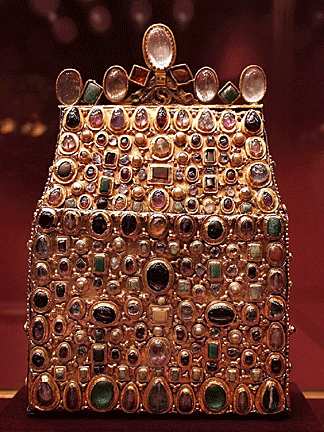 Artisans
designed many reliquaries to be portable, often being exhibited in
public or carried in procession on the saint's feast day or on other
holy days. Pilgrimages often centered on the veneration of relics. The
faithful often venerated relics by bowing before the reliquary or
kissing it. Christian churches distinguished between the veneration of
relics of saints to that given to the worship of God. Artisans
designed many reliquaries to be portable, often being exhibited in
public or carried in procession on the saint's feast day or on other
holy days. Pilgrimages often centered on the veneration of relics. The
faithful often venerated relics by bowing before the reliquary or
kissing it. Christian churches distinguished between the veneration of
relics of saints to that given to the worship of God.
Sixteenth-century reformers such as Martin Luther opposed the use of
relics since many had no proof of historical authenticity, as well as
objecting to a cult of saints. During the Reformation, Calvinists and
their followers destroyed many reliquaries, particularly in northern
Europe, by melting them down or pulling them apart to recover precious
metals and gems. Nevertheless, the use and manufacture of reliquaries
continues in Roman Catholic and Orthodox Christian countries.
Reliquary Forms
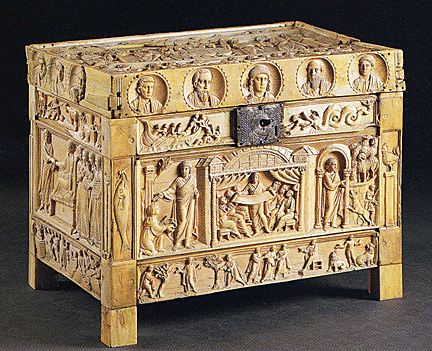 Since
the relics themselves were considered more valuable than precious stones
and more to be esteemed than gold, it was considered only appropriate
that they be enshrined in vessels, or reliquaries, crafted of or covered
by gold, silver, ivory, gems, and enamel. These precious objects
constituted a major form of artistic production across Europe and
Byzantium throughout the Middle Ages. Since
the relics themselves were considered more valuable than precious stones
and more to be esteemed than gold, it was considered only appropriate
that they be enshrined in vessels, or reliquaries, crafted of or covered
by gold, silver, ivory, gems, and enamel. These precious objects
constituted a major form of artistic production across Europe and
Byzantium throughout the Middle Ages.
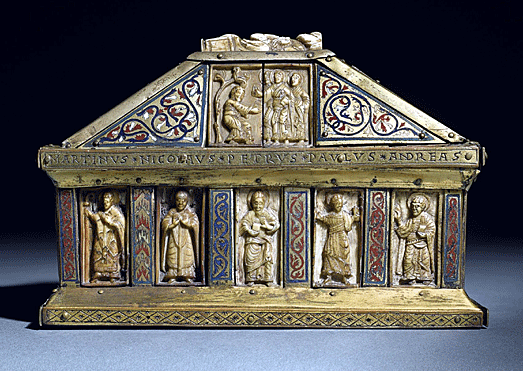
The earliest reliquaries were either simply boxes or caskets based on an
architectural design, taking the form of a model of a church with a
pitched roof.
 Known
as chasse, those from the 12th to the 14th centuries had wooden
frameworks with gilt-copper plaques nailed on, decorated in champlevé
enamel. Artisans in the town of Limoges in France produced the greatest
number. Known
as chasse, those from the 12th to the 14th centuries had wooden
frameworks with gilt-copper plaques nailed on, decorated in champlevé
enamel. Artisans in the town of Limoges in France produced the greatest
number.
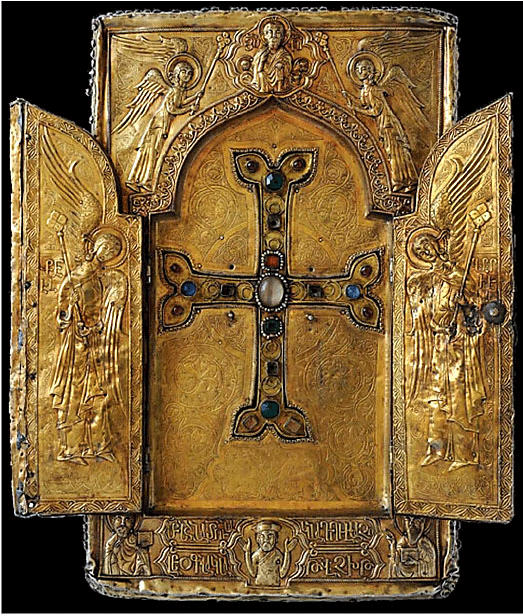
Relics of the True Cross, housed in magnificent gold and silver
cross-shaped reliquaries decorated with enamels and precious stones,
became popular from the 9th century onward. From about the end of the
10th century, reliquaries in the shape of the relics they housed also
gained popularity. The skull of Pope Alexander I, for example, was
housed in a head-shaped reliquary. Similarly, the bones of saints were
often housed in reliquaries that recalled the shape of the original body
part, such as an arm or a foot.
 A
philatory was a transparent reliquary designed to contain and
exhibit the bones and relics of saints. This style of reliquary had a
viewing portal to view the relic inside. The feretrum was a
medieval form of reliquary containing the sacred effigies and relics of
a saint. A
philatory was a transparent reliquary designed to contain and
exhibit the bones and relics of saints. This style of reliquary had a
viewing portal to view the relic inside. The feretrum was a
medieval form of reliquary containing the sacred effigies and relics of
a saint.
 During
the later Middle Ages, Christian churches sometimes used the monstrance,
mostly used for consecrated hosts, as a reliquary. These housed the
relic in a rock crystal, or glass capsule mounted on a column above a
base, enabling the relic to be displayed to the faithful. During
the later Middle Ages, Christian churches sometimes used the monstrance,
mostly used for consecrated hosts, as a reliquary. These housed the
relic in a rock crystal, or glass capsule mounted on a column above a
base, enabling the relic to be displayed to the faithful.
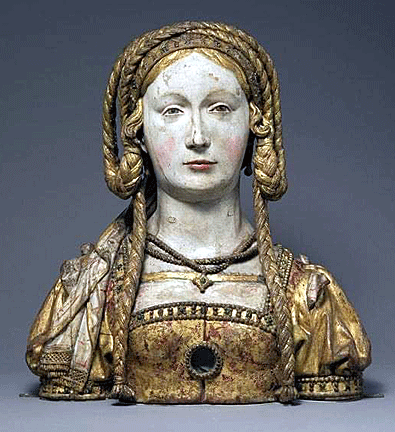
Reliquaries were also fashioned into full-body statues, or more
abbreviated, but still imposing, bust-length images of saints, often
those with local reputations of great authority. Set on an altar and
carried in procession, their arrival sometimes heralded by the sounding
of ivory horns, these highly decorated works of art made an indelible
impression on the faithful.
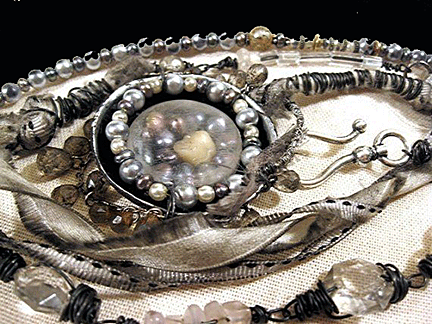
Reliquaries also took the form of large pieces of gold or silver
jewelry, housing tiny relics such as pieces of the Holy Thorn.
<
Back to Antique Spotlight Archives
Next Article >
|