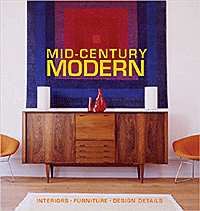
The 1950’s house was a scientific
triumph, designed in a laboratory and tested on inhabitants of all
ages before being built for the masses. Never had homes been so
thoroughly contemporary, with antiques and period styles entirely
banished. This video explores the interior decor of that decade.
Explore the
Characteristics of Mid-Century Modern Architecture, one of the most
influential styles of the 20th century. Known for its clean lines,
flat planes, large glass walls, natural materials, and strong
indoor–outdoor connection, Mid-Century Modern design shaped the way
people think about modern living. Click on the
title to view.
And look for other videos in selected articles.
Can't find what
you're looking for? Go to
our Sitemap
Find
out what's coming in the
2026 Holiday
Edition
of
the
THE ANTIQUES ALMANAC
"Christmas in America"
COMING IN
December
Share pages
of this ezine with your friends using the buttons
provided with each article.
The morning of December 17, 1903 dawned bright with a
strong chill in the air. The wind hit 25 miles per hour
over the dunes at Kill Devil Hills, dangerous conditions
for flying a prototype aircraft. The Wright Brothers of
Dayton, Ohio, dressed in coats and ties to add a touch
of private ceremony for an event that would alter the
world. To learn more read "The
Dream of Flight."
Antiques in the Moment by Bob Brooke
Did
you ever think about who may have owned or used a particular antique?
One day as I was cleaning my living room filled with pieces dating from
the early 19th century to the early 20th, I suddenly realized that every
object in the room was at one time owned and used by someone else. So I
put a CD of piano music by 19th-century American composer Louis
Gottshalk in my CD player and wondered how many of the pieces had heard
it before with a previous owner.
History can be fascinating. What we study in school is only the tip of
the iceberg. But the items people used daily really tell about what life
was like.
What is Social History?
If you’re going to collect antiques, you need to immerse yourself in
whatever period of history appeals to you. Genealogists call this social
history—the daily goings on of ordinary people. Unlike political
history, which deals with affairs of state, social history is an
outgrowth of economic history. It’s more of a combination of a economic
history and sociology.
Finding out more about what happened at a particular time in history
makes antiques come alive. How did particular social groups use them?
The economic status of a group would have affected what they used and
the quality of object.
Learning About the History Behind
Antique Styles
Browsing through antique shops and malls, plus reading books and online
articles as much as possible will help. But don’t just read books and
articles about antiques. Learn about historic events and how they
affected people’s lives and the styles of the time. No antique style
just appeared. All evolved over time—sometimes decades—and all came into
being for a reason.
Acquaint
yourself with the major styles Jacobean, Queen Anne, George III, Art
Nouveau, Arts and Crafts, Art Deco. Learn the characteristics of each
style.
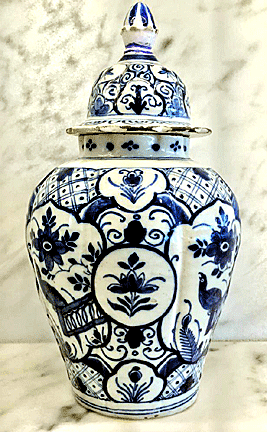
Try to learn just the main product names at first. Delft, Blue Willow,
Victorian and Staffordshire will take you a long way in the real world
of ceramic antiques. Periods are also important. Late 17th century, 19th
century and even early 1950s is the language that most antique
enthusiasts know. Don't rush to learn everything at once as you’ll pick
these up pretty quickly. You’ll be surprised how much knowledge you can
acquire just by reading labels. Associating styles with descriptions
will also bring your knowledge up to speed extremely quickly. A Saturday
afternoon spent browsing will be invaluable.
No antiques or collectibles
are sold on this site.
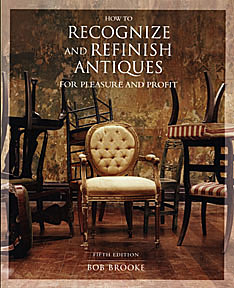
How to Recognize and
Refinish Antiques for Pleasure and Profit
Have
you ever bought an antique or collectible that was less than perfect and
needed some TLC? Bob's new book offers tips and step-by- step
instructions for simple maintenance and restoration of common antiques.
Read an
Excerpt
Auction News
Get up to the minute news of antiques auctions
around the country and the world.



























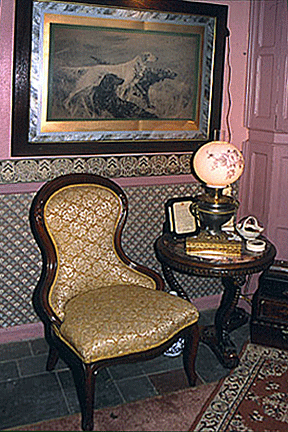 Did
you ever think about who may have owned or used a particular antique?
One day as I was cleaning my living room filled with pieces dating from
the early 19th century to the early 20th, I suddenly realized that every
object in the room was at one time owned and used by someone else. So I
put a CD of piano music by 19th-century American composer Louis
Gottshalk in my CD player and wondered how many of the pieces had heard
it before with a previous owner.
Did
you ever think about who may have owned or used a particular antique?
One day as I was cleaning my living room filled with pieces dating from
the early 19th century to the early 20th, I suddenly realized that every
object in the room was at one time owned and used by someone else. So I
put a CD of piano music by 19th-century American composer Louis
Gottshalk in my CD player and wondered how many of the pieces had heard
it before with a previous owner.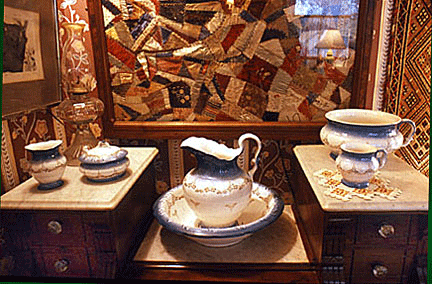
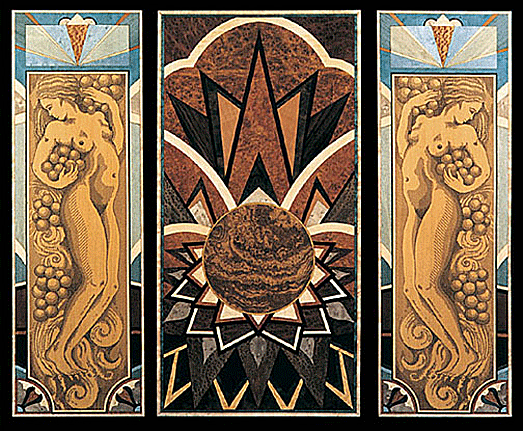
 Acquaint
yourself with the major styles Jacobean, Queen Anne, George III, Art
Nouveau, Arts and Crafts, Art Deco. Learn the characteristics of each
style.
Acquaint
yourself with the major styles Jacobean, Queen Anne, George III, Art
Nouveau, Arts and Crafts, Art Deco. Learn the characteristics of each
style.