|
Exactly What is a Pier Table?
QUESTION:
 I
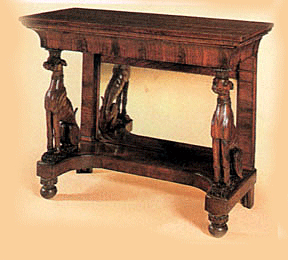
like to visit historic houses. Invariably, the first stop is by a narrow
table in the main hall. Next to it usually stands a hall tree. The
docent usually begins by telling us that the women of the house would
stand in front of this narrow table and adjust their petticoats using
the mirror placed behind it. This seems like a plausible explanation.
When and how did this practice begin? And why is the table called a
“pier” table? According to the dictionary, a pier is a structure leading
from the shore out to sea, used as a boat landing or for entertainment. I
like to visit historic houses. Invariably, the first stop is by a narrow
table in the main hall. Next to it usually stands a hall tree. The
docent usually begins by telling us that the women of the house would
stand in front of this narrow table and adjust their petticoats using
the mirror placed behind it. This seems like a plausible explanation.
When and how did this practice begin? And why is the table called a
“pier” table? According to the dictionary, a pier is a structure leading
from the shore out to sea, used as a boat landing or for entertainment.
Thanks,
Albert
________________________________________________________________________
ANSWER:
 The
English language can be complicated. There are many words that sound the
same but are spelled differently and have different meanings. Over time,
the word “peer,” meaning to look through a window with difficulty, may
have been confused with the word “pier,” a seaside structure used for
landing boats or for entertainment. Since most people coming to the
United States in the 18th and 19th centuries spoke a different
language—even British English was different than American English—it’s
only natural that along the way, the two words got confused. It’s also
likely that because a pier table juts out from the wall that it
resembled a pier jutting out from the shore. The
English language can be complicated. There are many words that sound the
same but are spelled differently and have different meanings. Over time,
the word “peer,” meaning to look through a window with difficulty, may
have been confused with the word “pier,” a seaside structure used for
landing boats or for entertainment. Since most people coming to the
United States in the 18th and 19th centuries spoke a different
language—even British English was different than American English—it’s
only natural that along the way, the two words got confused. It’s also
likely that because a pier table juts out from the wall that it
resembled a pier jutting out from the shore.
 Docents
in historic houses always seem to have interesting stories about the
furniture in them. One of these concerns the pier table. Supposedly,
Southern women would stop in front of it and check the mirror below it
to see if their petticoats were showing before going out. However, there
are two things wrong with this story. First, the table did not appear
primarily in the South, and second, women of the 19th century did no
such thing. A woman of the time wouldn’t have been caught dead adjusting
her undergarments in a public area of her house. Besides that, the
architecture of the table, with the top projecting forward, well out
over the mirror, prevents anyone, male or female from actually seeing
beyond the area of their feet. Docents
in historic houses always seem to have interesting stories about the
furniture in them. One of these concerns the pier table. Supposedly,
Southern women would stop in front of it and check the mirror below it
to see if their petticoats were showing before going out. However, there
are two things wrong with this story. First, the table did not appear
primarily in the South, and second, women of the 19th century did no
such thing. A woman of the time wouldn’t have been caught dead adjusting
her undergarments in a public area of her house. Besides that, the
architecture of the table, with the top projecting forward, well out
over the mirror, prevents anyone, male or female from actually seeing
beyond the area of their feet.
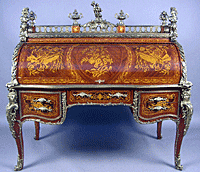
So what exactly is a pier table? Simply, it’s a low, usually narrow
table that stands in the pier, or wall section between two windows,
often in the parlor of a wealthier person’s house. Cabinetmakers often
made them in pairs of expensive woods, such as mahogany, rosewood, and
giltwood. Unfortunately, ill informed curators of historic
homes—originally wealthy women who joined groups who raised money to
restore and manage historic homes—had heard the story of the pier table
and placed it in the main hall where it didn’t belong in the first
place.
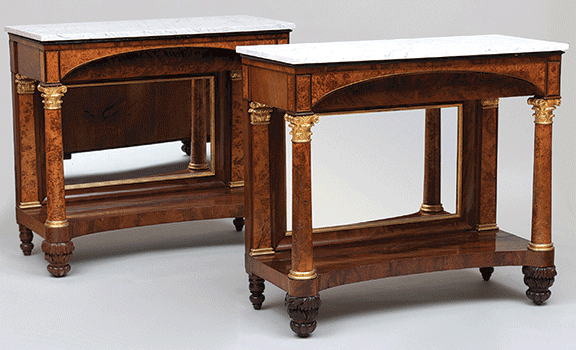
The pier table first appeared in continental Europe in the 16th and 17th
centuries and became popular in England in the last quarter of the 17th
century. The first known use of such a table in America was in 1765 and
remained popular until the mid 19th century.
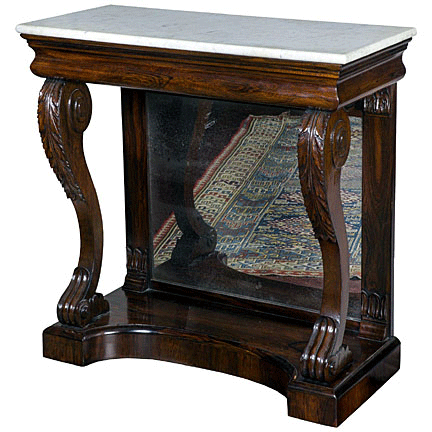 During
the Regency Period from 1800 to 1830, a pier table had a mirror mounted
between its back legs against the wall, or sometimes above it. The
purpose of the mirror was to reflect the light around the room, not to
check petticoats. The mirrors were often slightly angled towards the
ceiling in order to catch as much light as possible, thus precipitating
the fictional account. The extensive use of concave looking glasses in
the 18th century and mirrors in the 19th century bounced the dim light
from oil lamps around the room, increasing overall brightness. The
mirror also reflected the pattern in the tile or carpet and helped make
the room feel larger. During
the Regency Period from 1800 to 1830, a pier table had a mirror mounted
between its back legs against the wall, or sometimes above it. The
purpose of the mirror was to reflect the light around the room, not to
check petticoats. The mirrors were often slightly angled towards the
ceiling in order to catch as much light as possible, thus precipitating
the fictional account. The extensive use of concave looking glasses in
the 18th century and mirrors in the 19th century bounced the dim light
from oil lamps around the room, increasing overall brightness. The
mirror also reflected the pattern in the tile or carpet and helped make
the room feel larger.
Eventually, pier tables became symbols of wealth. Reflecting light
around a room on highly-polished surfaces, including mirrors, glass,
crystal pendants on chandeliers, or fine wood surfaces, was a way of
demonstrating wealth. It dazzled the eye and demonstrated a great deal
of labor from servants who maintained that high degree of cleanliness.
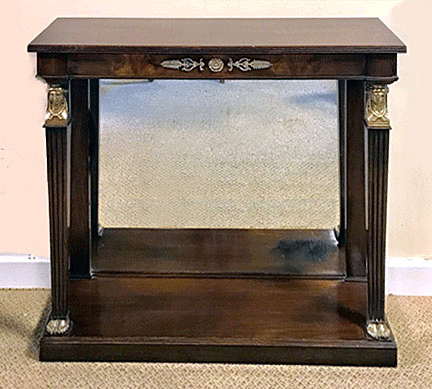 At
the beginning of the 19th century, cabinetmakers around Philadelphia
usually produced pier tables in the Chippendale style. They used
Chippendale’s English design and traditional construction techniques
since most had been trained by English cabinetmakers. The table became
an American staple in larger homes during the Federal Period in the
early 19th century, primarily in the Northern states, not in the South. At
the beginning of the 19th century, cabinetmakers around Philadelphia
usually produced pier tables in the Chippendale style. They used
Chippendale’s English design and traditional construction techniques
since most had been trained by English cabinetmakers. The table became
an American staple in larger homes during the Federal Period in the
early 19th century, primarily in the Northern states, not in the South.
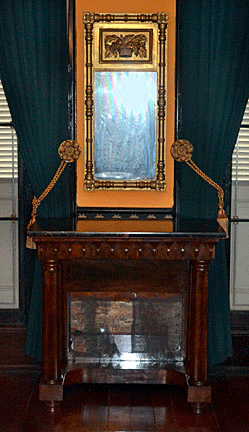
The most commonly seen example of the table is in the Classical style of
the early 1800s, usually with a marble top and columns of some
sort—often also marble—at each corner supporting the heavy top. But why
a marble top on a hall table? These tables were almost always 30-inches
high, the exact height of a dining room table. As such, they could be
used in the dining room as an extra serving space without fear of damage
from hot plates on the marble top.
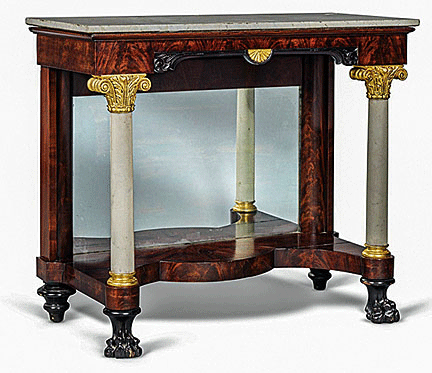
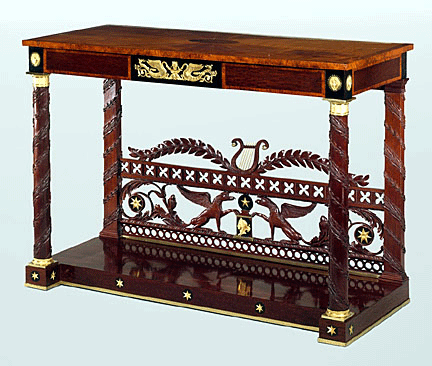
The pier table reached it decorative zenith in the Empire period of the
1820s at the hands of such designers as Charles Honoré Lannuier, Thomas
Hope and Joseph Meeks. The use of gilded caryatids—winged, female
figures from Greek architecture—were frequently used as columns. Meeks
used a set of lyres at each end to support the top.
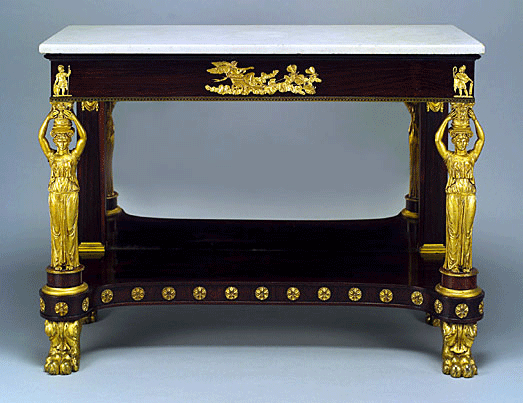
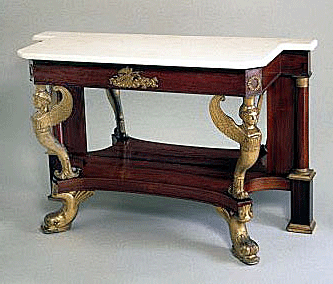 One
of the greatest designers of pier tables was French ébéniste Charles-Honoré
Lannuier, who emigrated in 1803 and became one of the leading furniture
makers in New York. Trained in Paris, he rose to fame during the
American Federal Period. After the Revolutionary War and War of 1812,
anti-English sentiment made French goods especially appealing to
Americans. Lannuier imported French pattern books to keep abreast of the
latest Napoleonic style. His work featured robustly carved and gilded
caryatid supports, carved dolphin feet, and elaborate gilt-bronze ormolu
mounts. And while not every wealthy person could afford a Lannuier pier
table, his tables reached the height of design excellence in the first
two decades of the 19th century. One
of the greatest designers of pier tables was French ébéniste Charles-Honoré
Lannuier, who emigrated in 1803 and became one of the leading furniture
makers in New York. Trained in Paris, he rose to fame during the
American Federal Period. After the Revolutionary War and War of 1812,
anti-English sentiment made French goods especially appealing to
Americans. Lannuier imported French pattern books to keep abreast of the
latest Napoleonic style. His work featured robustly carved and gilded
caryatid supports, carved dolphin feet, and elaborate gilt-bronze ormolu
mounts. And while not every wealthy person could afford a Lannuier pier
table, his tables reached the height of design excellence in the first
two decades of the 19th century.
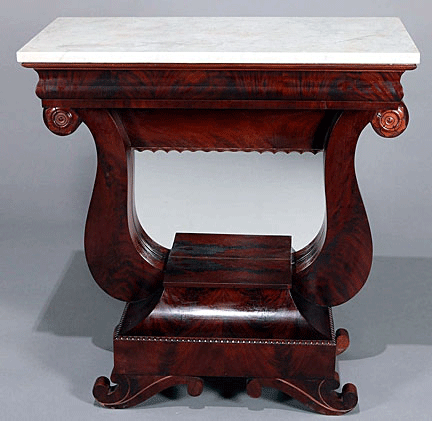 After
the Empire period, the Late Classicism style prevailed in the 1840s and
1850s with its large cyma curves, scrolled supports and undecorated
expanses of crotch-cut mahogany veneer. This is the table that was
frequently associated with the Southern plantation and the petticoat
myth. After
the Empire period, the Late Classicism style prevailed in the 1840s and
1850s with its large cyma curves, scrolled supports and undecorated
expanses of crotch-cut mahogany veneer. This is the table that was
frequently associated with the Southern plantation and the petticoat
myth.
After the Civil War, the pier table came to be known as a console table,
and that’s when it began appearing in the foyers and front hallways of
houses of the wealthy. Generally speaking, console tables stood higher
than their pier table counterparts. They also usually didn’t have
mirrors behind them as lighting technology had greatly improved since
the beginning of the 19th century.
<
Back to Readers Ask Archives
Next Article > |