|
Improving Time
by Bob Brooke
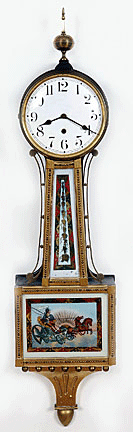 As
the new Republic of the United States of America began to take
shape, innovations in design and craftsmanship began to appear. One
of these was the banjo clock, the first American 8-day wall clock,
the first American wall clock to have the pendulum suspended in
front of the weight in the case, and the first American wall clock
to have the weight attached to a pulley. As
the new Republic of the United States of America began to take
shape, innovations in design and craftsmanship began to appear. One
of these was the banjo clock, the first American 8-day wall clock,
the first American wall clock to have the pendulum suspended in
front of the weight in the case, and the first American wall clock
to have the weight attached to a pulley.
Though it has become known as a banjo clock, Simon Willard, its
inventor and noted early American clockmaker, first referred to it
as his Patent Timepiece, He created the first one in Roxbury, near
Boston, Massachusetts. Willard, originally of Grafton,
Massachusetts, patented his clock in 1802. He reduced the brass
clock mechanism to a much smaller size, thus saving brass which was
in scarce supply in the early 19th century.
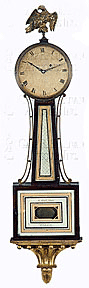 He
used the shape of a traditional wheel barometer for his clock case,
which he built by hand, to order. By 1805 the clockworks, as well as
standard cases, could be produced in quantity, reducing the cost of
the clock. Its small size meant a much lower price of $30, although
this was still a great deal of money at the time. He
used the shape of a traditional wheel barometer for his clock case,
which he built by hand, to order. By 1805 the clockworks, as well as
standard cases, could be produced in quantity, reducing the cost of
the clock. Its small size meant a much lower price of $30, although
this was still a great deal of money at the time.
Because a banjo clock normally lacked a striking mechanism and
indicated time only by its hands and dial, some horologists called
it a timepiece rather than a true clock.
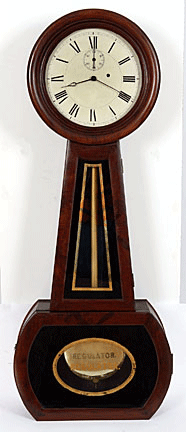
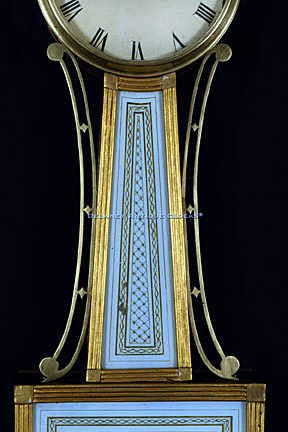 The
banjo-style wooden case usually featured a round opening for a
painted dial, a long-waisted “throat,” and a rectangular pendulum
box with hinged door. Reverse-painted panels ornamented both the
throat and door, and curved and pierced brass frets usually flanked
the case. A finial mounted atop the case usually took the form of a
cast-brass eagle or a turned, giltwood acorn. The
banjo-style wooden case usually featured a round opening for a
painted dial, a long-waisted “throat,” and a rectangular pendulum
box with hinged door. Reverse-painted panels ornamented both the
throat and door, and curved and pierced brass frets usually flanked
the case. A finial mounted atop the case usually took the form of a
cast-brass eagle or a turned, giltwood acorn.
 Below,
a narrow trunk, slightly wider at the bottom than the top, protected
the weight, and at the bottom a wider compartment contained the
lower part of the pendulum. Slender concave metal ornaments
connected the three main parts of the clock. The design of Willard’s
clock was perfect from the beginning. Below,
a narrow trunk, slightly wider at the bottom than the top, protected
the weight, and at the bottom a wider compartment contained the
lower part of the pendulum. Slender concave metal ornaments
connected the three main parts of the clock. The design of Willard’s
clock was perfect from the beginning.
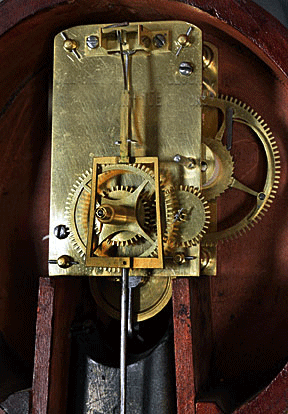
Willard's 3-foot tall banjo clock was a lightly built, compact wall
timekeeper that was both accurate and dependable. It was economical
to produce, graceful in appearance, and usually lacked hour-striking
and alarm mechanisms. Weight-driven, it contained a small brass
movement which further reduced its size and weight. The movement had
been calculated so that a small drop of the weight—only 15 inches
compared to about 6 feet for a tall case clock—would keep it running
for 8 days. For ease of maintenance, Willard hung the clock’s
pendulum in front of the movement, not behind, as in tall case or
Massachusetts shelf clocks, an arrangement that American clockmakers
soon widely adopted.
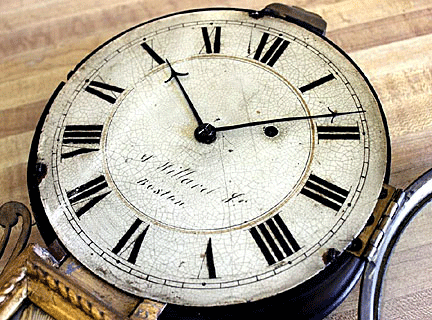 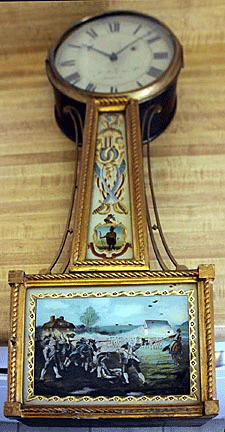 A
typical banjo clock featured a white, circular face, painted with
black Roman numerals, that flows into a long, tapered neck, which
met at a square base. It also featured an elaborately painted hinged
door of the base, often painted with a beautiful landscape, a naval
scene, or an ornamental pattern. Thin pieces of curved brass often
ran down the necks of these clocks, and brass sculptures, most
commonly of an eagle, routinely crown their tops. A
typical banjo clock featured a white, circular face, painted with
black Roman numerals, that flows into a long, tapered neck, which
met at a square base. It also featured an elaborately painted hinged
door of the base, often painted with a beautiful landscape, a naval
scene, or an ornamental pattern. Thin pieces of curved brass often
ran down the necks of these clocks, and brass sculptures, most
commonly of an eagle, routinely crown their tops.
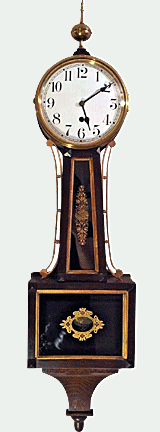 Willard’s
Patent Timepiece revolutionized the clock industry, becoming the
most popular clock in the United States. However, he didn’t apply
for his patent until 1802, and by that time his competitors had
already started to produce clocks similar to his. The clock became
so popular that Willard didn’t even pursue these patent
infringements. His company eventually produced over 4,000 banjo
clocks. Willard’s
Patent Timepiece revolutionized the clock industry, becoming the
most popular clock in the United States. However, he didn’t apply
for his patent until 1802, and by that time his competitors had
already started to produce clocks similar to his. The clock became
so popular that Willard didn’t even pursue these patent
infringements. His company eventually produced over 4,000 banjo
clocks.
 Willard
permitted his numerous clockmaking relatives, former apprentices,
and other clockmakers to produce banjo clocks following his original
design. Variants of the banjo-style clock made by others include
examples with square or diamond-shaped dials, and the extremely
opulent, heavily gilt "girandole" style. Willard
permitted his numerous clockmaking relatives, former apprentices,
and other clockmakers to produce banjo clocks following his original
design. Variants of the banjo-style clock made by others include
examples with square or diamond-shaped dials, and the extremely
opulent, heavily gilt "girandole" style.
Gideon Roberts, a Revolutionary War veteran from Bristol,
Connecticut, made banjo clocks more affordable. He replaced the
brass movements with less expensive wooden ones and also used
painted paper dials.
Banjo clocks were popular for 60 years. In the 1840s, railroads
began using them at their stations. Some banjo clocks made for the
railroads reached a whopping 7 feet high. But by the 1860s, banjo
clocks became less desirable, and soon their production came almost
to a complete halt.
Unfortunately for collectors of antique banjo clocks, many Willard
banjo clocks do not carry their maker’s name, so it’s difficult to
identify who made them.
<
Back to More Antique Spotlights
Next Article >
|