|
Mementos of Faith
________________________________________________________
QUESTION:
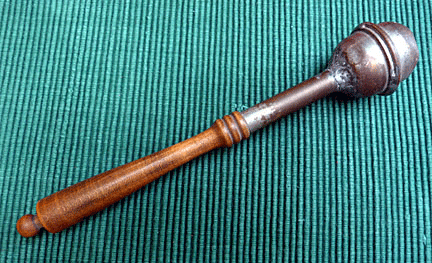 I
was browsing at a local flea market this past weekend and came upon a
strange object. It seems to be some sort of wand. It has a turned wooden
handle at the end of which is a round metal ball with tiny holes in it.
The dealer said she picked it up at a church sale, so I bought it out of
curiosity. Can you please tell me what this is and how it might have
been used? I
was browsing at a local flea market this past weekend and came upon a
strange object. It seems to be some sort of wand. It has a turned wooden
handle at the end of which is a round metal ball with tiny holes in it.
The dealer said she picked it up at a church sale, so I bought it out of
curiosity. Can you please tell me what this is and how it might have
been used?
Thanks,
Paul
______________________________________________________
ANSWER:
 You
are now the proud owner of an aspergillum or holy water wand, used by
priests in Catholic and Anglican churches. You
are now the proud owner of an aspergillum or holy water wand, used by
priests in Catholic and Anglican churches.
The priest uses an aspergillum to sprinkle holy water. It comes in two
common forms—a brush that the priest dips in an aspersorium or bucket of
holy water and shakes, and a silver ball with tiny holes attached to a
stick.
Priests use an aspergillum for the Rite of Baptism and during the
Easter Season. In addition, priests use an aspergillum to bless the
candles during Candlemas services and the palms during Palm Sunday Mass.
At a requiem, if a coffin is present, the priest will sprinkle holy
water on it. The aspergillum can also be used when blessing other things
like houses, pets, crops, and such. The name derives from the Latin verb
aspergere “to sprinkle.”
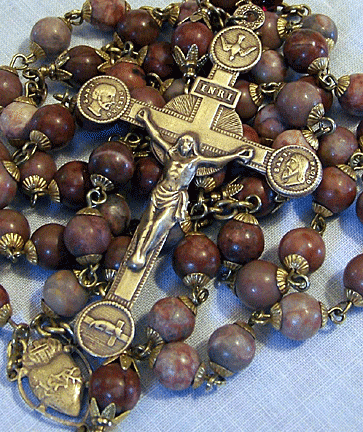 Ecclesiastical
collectors search antique shops, flea markets and church rummage sales
in the hopes of finding objects and furniture used in mostly Christian
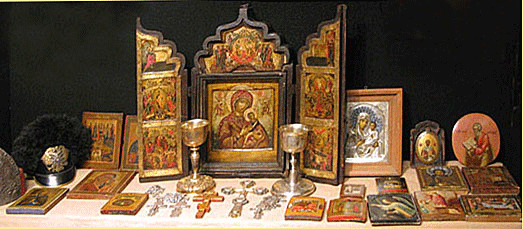
religious practices. Examples of monastic art, the delicate needlework
of cloistered nuns, painted icons, carved candleholders, prayer beads
and baptismal fonts originally intended for Christian houses of prayer
often command astronomic prices from knowledgeable antique dealers.
Cups, bowls, dishes, altar linens and the ceremonial vestments provided
the finest examples of craftsmanship and art work. Ecclesiastical
collectors search antique shops, flea markets and church rummage sales
in the hopes of finding objects and furniture used in mostly Christian
religious practices. Examples of monastic art, the delicate needlework
of cloistered nuns, painted icons, carved candleholders, prayer beads
and baptismal fonts originally intended for Christian houses of prayer
often command astronomic prices from knowledgeable antique dealers.
Cups, bowls, dishes, altar linens and the ceremonial vestments provided
the finest examples of craftsmanship and art work.
 But,
what became of the thousands of beautifully wrought religious utensils,
garments and symbols made obsolete by the sweeping changes in Catholic
Church policies and the closures of Catholic churches beginning in the
1960s? But,
what became of the thousands of beautifully wrought religious utensils,
garments and symbols made obsolete by the sweeping changes in Catholic
Church policies and the closures of Catholic churches beginning in the
1960s?
Back then, no one wanted the larger-than-life statues, banners appliquéd
with obscure religious symbols, heavy marble holy water fonts,
old-fashioned altar pieces and paintings that graphically depicted the
tortured deaths of religious martyrs? Since these weren’t quick moving
commodities or even investment items for antique dealers, church
basements, rectory attics, and parochial school storage areas began to
bulge with hand-turned altar railings, huge sanctuary lamps, ornate
metal reliquaries and the delicately carved doors of closet-sized
confessionals.
Gradually, these outmoded, unwanted and useless items trickled away.
Well-intentioned volunteer groups hauled much of this detritus back into
the light of day and offered it at fundraising events such as church
rummage sales. When it became necessary to raze a church, the church
hierarchy offered old stained glass windows and exquisite, glass door
inserts to local antique dealers on a "make-an-offer" basis. Salvage
companies carted off the carved lions, fancy wooden fretwork and the
masonry arches from above church doors.
 Starting
in the late 1980s, interior decorators began to incorporate religious
artifacts into the interiors of up-scale homes. This trend propelled
discarded church surplus into the realm of high style. Pieces now
command huge prices at architectural warehouses. Consider the wild
popularity of angel items, for example. Starting
in the late 1980s, interior decorators began to incorporate religious
artifacts into the interiors of up-scale homes. This trend propelled
discarded church surplus into the realm of high style. Pieces now
command huge prices at architectural warehouses. Consider the wild
popularity of angel items, for example.
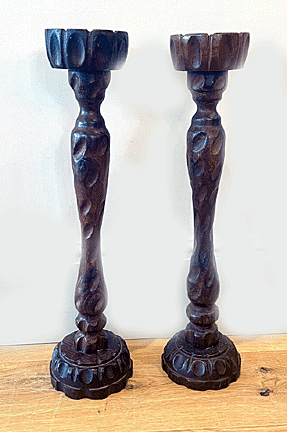
Candleholders for weddings and christenings, long pine pews,
processional crosses mounted on oak poles and even altars are showing up
at large flea markets. Since most churches use flowers during the year
for religious services, collectors can find all types of large altar
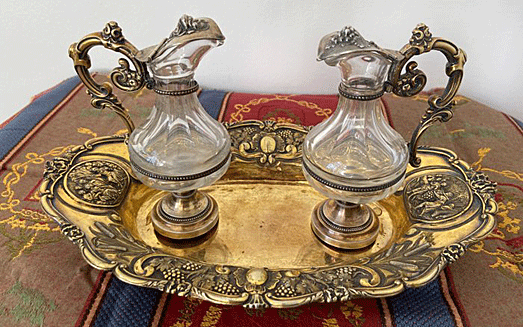
containers and floor vases. Bibles, candleholders, altar linens and
crosses of every size and material, as well as religious utensils, such
as cut crystal cruets, used by altar servers to present the water and
unconsecrated wine to the priest and easily identified by the incised
crosses, wheat sheaves and grape cluster motif.
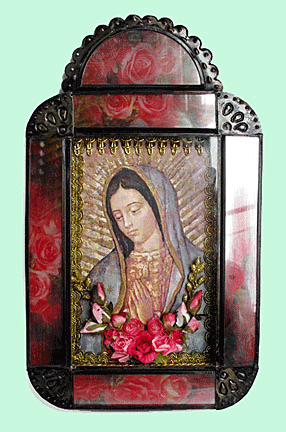
People buy religious items for three reasons. First, they might purchase
a chalice because of its artistic beauty. Second, they want it because
it evokes an emotional response from their childhood, a time when the
family attended Sunday services. And third, some people collect
Christian religious items with much the same interest that African
cultural memorabilia collectors buy tribal masks. They don’t use the
masks, but enjoy displaying them, researching them, and using them as
unique decorations.
 And
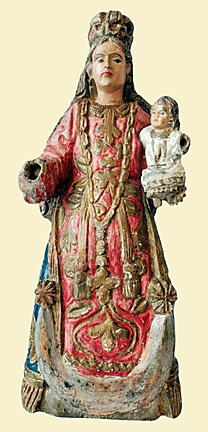
don’t think religious objects appear for sale only in the U.S. Flea
market vendors, especially in Mexico City, often have beautiful old
vestments on display, as well as santos, carved wooden figures of
saints. A small but unique item is the nicho, a three dimensional,
recessed shadow box, dating back to the Spanish colonial period.
Traditionally, people used And
don’t think religious objects appear for sale only in the U.S. Flea
market vendors, especially in Mexico City, often have beautiful old
vestments on display, as well as santos, carved wooden figures of
saints. A small but unique item is the nicho, a three dimensional,
recessed shadow box, dating back to the Spanish colonial period.
Traditionally, people used
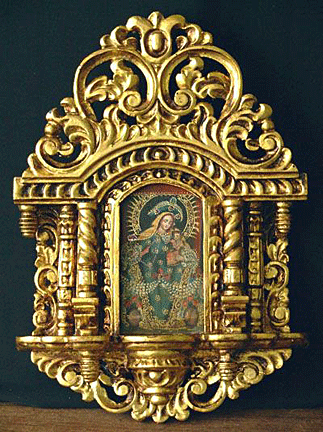 nichos
as portable shrines for patron saints or pictures of loved ones. The
faithful often carry these with them when going door to door in their
village asking for donations for the church. nichos
as portable shrines for patron saints or pictures of loved ones. The
faithful often carry these with them when going door to door in their
village asking for donations for the church.
Another item, often found hanging on the wall of a side chapel in a
Mexican church, is the retablo. These paintings on tin depict a loved
one who is sick or dying. Hanging their image in the church is a way of
asking people to pray for them. Other retablos are beautifully
handpainted testimonies of faith of the people of a particular Mexican
village.
Religious objects mean different things to different people. Many
mundane religious items retain value because many ceremonial practices
have been eliminated from worship and therefore the elaborate trappings
and religious utensils won’t be produced in the future.
<
Back to Readers Ask Archives Next
Article >
|