|
The Best-Selling Book of
All Time
by Bob
Brooke
 With
estimated total sales of over 5 billion copies, the Christian Bible is
the best-selling publication of all time. Old Bibles occasionally show
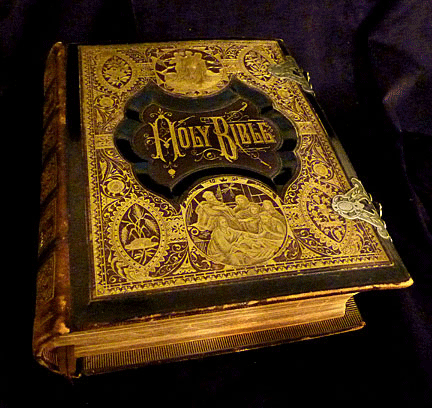
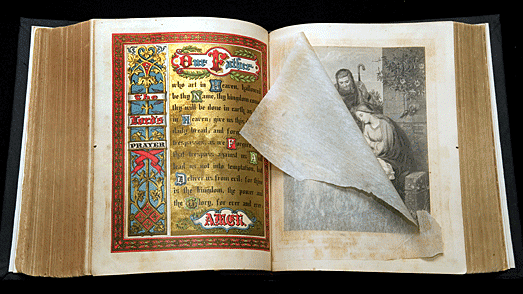
up at antique shows and church festivals. Most are large Victorian
pictorial family ones with a variety of features in addition to the
traditional religious verse. Besides the Old and New Testaments, many
include a Concordance, Aprocypha, and Psalms, and lots and lots of
beautiful illustrations. With
estimated total sales of over 5 billion copies, the Christian Bible is
the best-selling publication of all time. Old Bibles occasionally show
up at antique shows and church festivals. Most are large Victorian
pictorial family ones with a variety of features in addition to the
traditional religious verse. Besides the Old and New Testaments, many
include a Concordance, Aprocypha, and Psalms, and lots and lots of
beautiful illustrations.
With Bibles, condition is all important. Large family Bibles from the
19th century, particularly study Bibles with illustrations, maps, and
commentary are very popular with collectors. But what do old Bibles
include? Surely, the Old and New Testaments, but there’s often much
more. Bibles published for various Christian religions may include
different features, such as a Bible Dictionary, a History of the
Religious Dominations of the World, and detailed studies of the events
and persons in the Bible’s text. Then there’s the endless variety of
translations. For most Bible collectors, figuring out how to narrow the
scope of their collection can be a challenge.
 The
Bible is an anthology of instructions, stories, poetry, and prophecies.
Different religious communities compiled the religious texts into
several official collections or canons. The earliest contained the first
five books of the Bible, called the Torah, meaning “Teaching” in Hebrew,
and the Pentateuch, meaning “five books” in Greek. The second-oldest
part was the Nevi'im, a collection of narrative histories and
prophecies. The third collection, the Ketuvim, contained psalms,
proverbs, and narrative histories. The
Bible is an anthology of instructions, stories, poetry, and prophecies.
Different religious communities compiled the religious texts into
several official collections or canons. The earliest contained the first
five books of the Bible, called the Torah, meaning “Teaching” in Hebrew,
and the Pentateuch, meaning “five books” in Greek. The second-oldest
part was the Nevi'im, a collection of narrative histories and
prophecies. The third collection, the Ketuvim, contained psalms,
proverbs, and narrative histories.
The term Bible came from the Greek word meaning “books” originally
referred to the Hebrew Bible which corresponds to the Christian Old
Testament. The Christian Bible, on the other hand, also contains the New
Testament.

Today’s Bible is a collection of books. The oldest ones began as stories
and songs transmitted by word-of-mouth from generation to generation,
long before the birth of Jesus. Many people, mostly unknown, of
different cultures and languages wrote and compiled the Bible. The
living conditions of the writers—political, cultural, economic, and
ecological—varied enormously.
Biblical texts reflect a nomadic existence. It contains texts from
people with an established monarchy and Temple cult, texts from exiles,
texts born out of fierce oppression by foreign rulers, courtly texts,
texts from wandering charismatic preachers, texts from those who gave
themselves the airs of sophisticated Hellenistic writers.
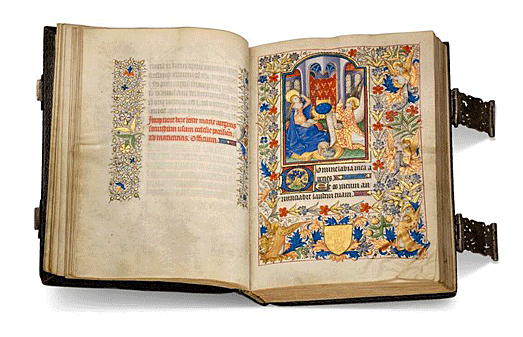
The gospels, which were stories about the life and teachings of Jesus,
along with the Paul’s epistles, and other texts, quickly coalesced into
the New Testament. The oldest parts of the Bible may be as early as 1200
BCE, while the New Testament had mostly formed by the 4th century CE.
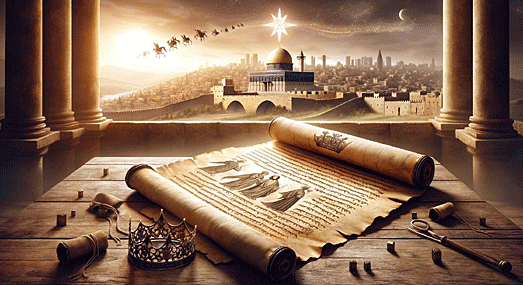
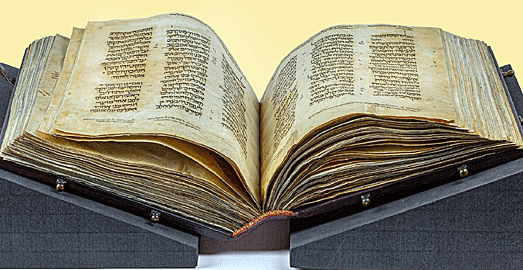
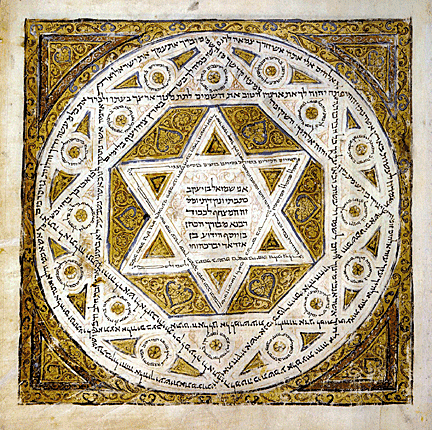 The
first codex form of the Hebrew Bible, the forerunner of the modern book,
was produced in the 7th century. Popularized by early Christians, it was
made by folding a single sheet of papyrus in half, forming "pages".
Assembling multiples of these folded pages together created a "book"
that was more easily accessible and more portable than scrolls. The
first complete printed press version of the Hebrew Bible was produced in
1488. The
first codex form of the Hebrew Bible, the forerunner of the modern book,
was produced in the 7th century. Popularized by early Christians, it was
made by folding a single sheet of papyrus in half, forming "pages".
Assembling multiples of these folded pages together created a "book"
that was more easily accessible and more portable than scrolls. The
first complete printed press version of the Hebrew Bible was produced in
1488.
The New Testament has been preserved in more manuscripts than any other
ancient work. Most early Christian copyists weren’t trained scribes.
They produced many copies of the gospels and Paul's letters soon after
the originals appeared.
 Early
Christians transported Pauls’ letters around the Roman Empire,
translating them into Old Syriac, Coptic, Ethiopic, and Latin, and other
languages. Historians believe he died before 68 CE during Nero's reign. Early
Christians transported Pauls’ letters around the Roman Empire,
translating them into Old Syriac, Coptic, Ethiopic, and Latin, and other
languages. Historians believe he died before 68 CE during Nero's reign.
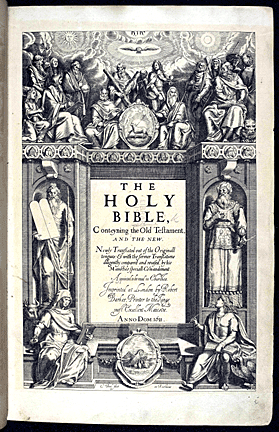
The King James version of the Bible, revised many times over the
centuries, is probably the most famous one in the English language. But
prior to its printing, at least 239 editions of the English Bible were
already in print. Since 1611, the number of English versions has
exploded.
 Gustave
Doré was one of the most acclaimed and popular illustrators of the 19th
century, and his illustrated Bible is a landmark in the field. He made
more than 200 engravings, illustrating the events of the Bible with
great detail. The first edition appeared in France in 1866, but
publishers like George Jones reprinted his work throughout the following
decades. Gustave
Doré was one of the most acclaimed and popular illustrators of the 19th
century, and his illustrated Bible is a landmark in the field. He made
more than 200 engravings, illustrating the events of the Bible with
great detail. The first edition appeared in France in 1866, but
publishers like George Jones reprinted his work throughout the following
decades.
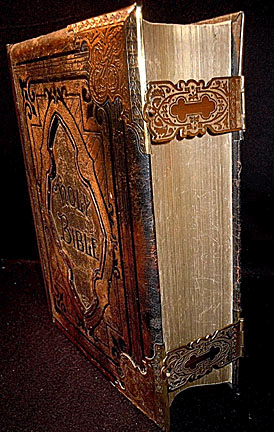 The
elaborateness of the binding doesn’t affect a Bible’s price. A Bible’s
value depends mostly on the completeness, condition, content, and size
of its pages, not on the age of the piece of leather that it happens to
be bound in at the time. Many collectors prefer a new leather binding,
to one that’s worn and less attractive. They’re more interested in the
quality of the pages of text. The
elaborateness of the binding doesn’t affect a Bible’s price. A Bible’s
value depends mostly on the completeness, condition, content, and size
of its pages, not on the age of the piece of leather that it happens to
be bound in at the time. Many collectors prefer a new leather binding,
to one that’s worn and less attractive. They’re more interested in the
quality of the pages of text.
Ninety percent of all Bibles are standard "Quarto" size printings,
measuring about 7 to 10 inches wide by 9 to 12 inches tall by 3 to 4
inches thick. Larger pulpit "Folio" size printings are ten times as
rare, therefore more expensive.
 Old
Bibles are always hardbound. Most have full leather covers and spine
while some have leather spines and corners but fabric centers on the
front and back covers. Old
Bibles are always hardbound. Most have full leather covers and spine
while some have leather spines and corners but fabric centers on the
front and back covers.
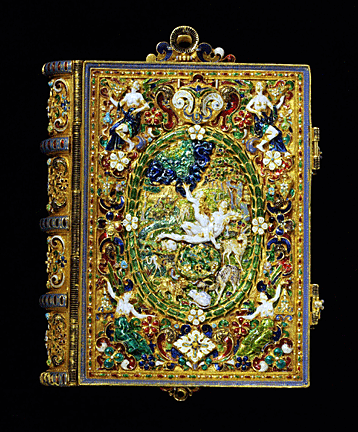
Armored or ornamented bindings with metalwork at the corners and center
and clasps and latches that hold the book shut also adorn some of these
Bibles. Most old family Bibles also have raised bands on their spine
known as a “hubbed” spine.
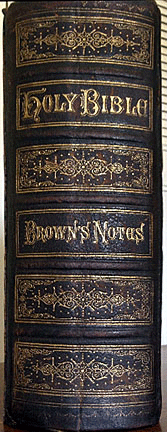 Bible
makers used two decorative techniques—blind stamping, in which an
impression was stamped into the leather, resulting in a design in which
where gold had been applied into the groove of the stamping, such as the
words "Holy Bible," which might have been stamped in gold onto the
spine. Bible
makers used two decorative techniques—blind stamping, in which an
impression was stamped into the leather, resulting in a design in which
where gold had been applied into the groove of the stamping, such as the
words "Holy Bible," which might have been stamped in gold onto the
spine.
Older Bibles often include a “concordance,” also referred to as “The
Table of Names and Table of Things.” This is essentially an alphabetical
index to the scripture which helps readers locate a passage based on
what words appear in that passage.
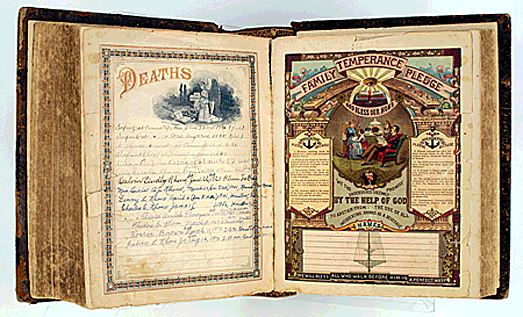
Some older Bibles offer a 36-page illustrated "Family Tree of Man" which
traces every generation of the first 4,000 years of mankind, from Adam
and Eve through Noah through David to Joseph, Mary, and Christ.
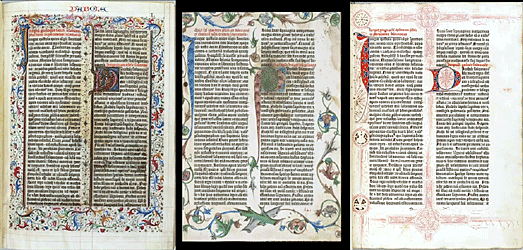
Gutenberg’s 42-line Bible is probably the most valuable printed book,
with single leaves selling for $60,000 and up. Bibles are the most
common book in the world, especially in the English language.
<
Back to Antiquities
Archives
Next Article >
|