 To
set themselves apart from their followers, the celebrants of
Christian religious rites wear special garments called vestments. In
the earliest days of the Church, vestments were essentially better
forms of the clothing worn during the time celebrants spent at the
altar. As time progressed and fashions changed, the dress of the
priests and clerics of the Church didn’t and gradually became more
distinct from secular fashions.
To
set themselves apart from their followers, the celebrants of
Christian religious rites wear special garments called vestments. In
the earliest days of the Church, vestments were essentially better
forms of the clothing worn during the time celebrants spent at the
altar. As time progressed and fashions changed, the dress of the
priests and clerics of the Church didn’t and gradually became more
distinct from secular fashions.
Few sacred artifacts provide such a consistent thread through
history as religious vestments. These garments have long served as
more than ceremonial clothing—they became expressions of faith,
continuity, and the social structures of their time. From early
Christian tunics to elaborate medieval chasubles, the evolution of
vestments reveals much about belief systems, craftsmanship, and
cultural identity.

 From
the Coptic vestments of Egypt to the richly embroidered garments of
Byzantium, vestments offer a rare glimpse into the ceremonial and
symbolic language of past societies. These artifacts aren’t just
textiles. They’re communication devices designed to indicate
hierarchy, season, and sacred function.
From
the Coptic vestments of Egypt to the richly embroidered garments of
Byzantium, vestments offer a rare glimpse into the ceremonial and
symbolic language of past societies. These artifacts aren’t just
textiles. They’re communication devices designed to indicate
hierarchy, season, and sacred function.
Generally, vestments include a variety of garments, including the
chausuble, the alb, the dalmatic, the stole, the maniple, and the
amice.
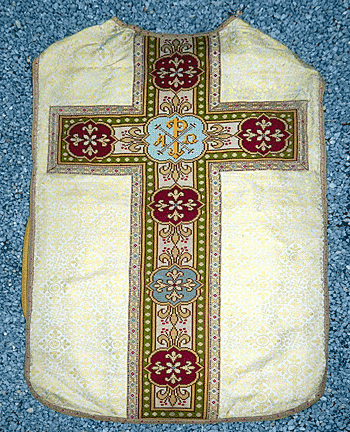
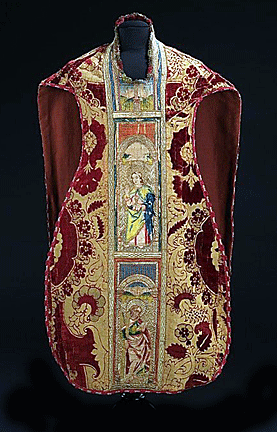
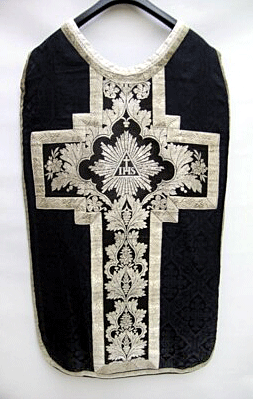
The chasuble evolved from a garment that celebrants wore in the
early centuries, first, by non-Roman citizens, who couldn’t legally
wear a toga. Gradually, Roman citizens, as well as Roman officials
wore it for public events. This garment became the chasuble, or “casula”,
a large garment of conical form. Originally, it reached almost to
the wearer’s feet, with the material bunched up to the sides to
allow the arms to be outside the garment.
 In
its early civil forms, there were two types of chasuble—one with a
hood and one without. The unhooded variety became what’s now known
as the chasuble while the hooded one became the cope.
In
its early civil forms, there were two types of chasuble—one with a
hood and one without. The unhooded variety became what’s now known
as the chasuble while the hooded one became the cope.
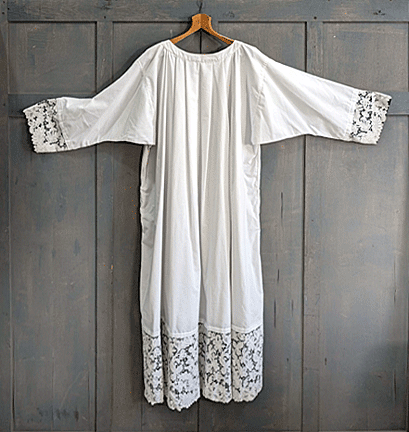
The alb derived from the Roman tunic, and originally often had bands
of adornment on the cuffs of the sleeves, as well as around the
bottom. Besides its function of adornment, this decoration also
served to protect those portions of the tunic which would receive
the most wear.
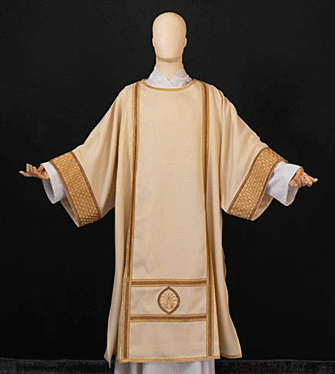 The
dalmatic was originally an exotic sort of tunic made of Dalmatian
wool, and characterized by its shorter length and by the width of
its sleeves. It was often decorated with v
The
dalmatic was originally an exotic sort of tunic made of Dalmatian
wool, and characterized by its shorter length and by the width of
its sleeves. It was often decorated with v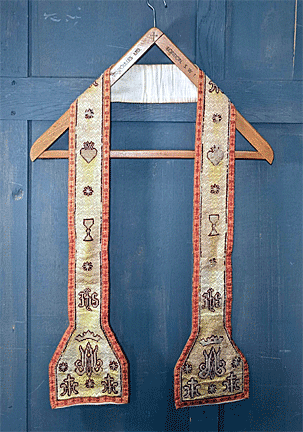 ertical stripes of a few
particular colors, reaching from the bottom of the garment to the
shoulders, as well as around the sleeves. The dalmatic also had
decoration at the bottom, much like that on the original alb. During
the Middle Ages, the dalmatic, like the chasuble, was a much longer,
flowing garment.
ertical stripes of a few
particular colors, reaching from the bottom of the garment to the
shoulders, as well as around the sleeves. The dalmatic also had
decoration at the bottom, much like that on the original alb. During
the Middle Ages, the dalmatic, like the chasuble, was a much longer,
flowing garment.
At first, the stole was a kind of face towel, originally named the
orarium. A deacon wore it over his left shoulder, outside the
dalmatic, and ready for use. Eventually, this use faded, and it
became more ceremonial, being attached on the right to prevent it
from slipping off. By the 8th century in Rome, celebrants began
wearing it underneath the dalmatic instead of over top of it.
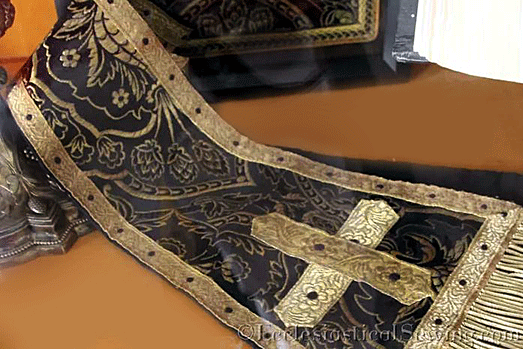
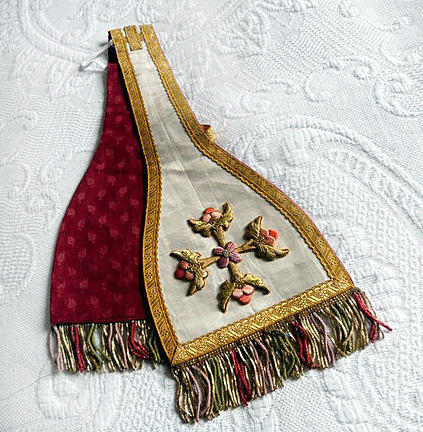 Originally
being made of linen and carried in the hand, the maniple became a
type of large napkin carried on the arm. It retained its practical
function longer, after the stole's own practical function became
ornamental. Today, celebrants wear the maniple only at the altar to
wipe the vessels and the celebrant's hand or mouth.”
Originally
being made of linen and carried in the hand, the maniple became a
type of large napkin carried on the arm. It retained its practical
function longer, after the stole's own practical function became
ornamental. Today, celebrants wear the maniple only at the altar to
wipe the vessels and the celebrant's hand or mouth.”
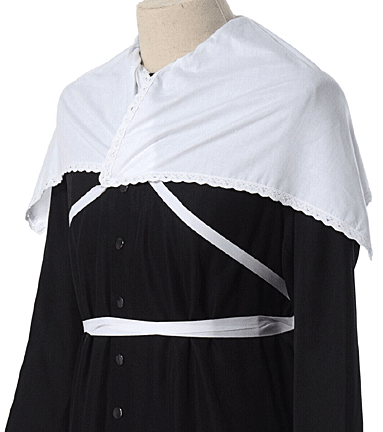 The
amice was one of the last liturgical garments to be introduced. Its
original function was to protect the wearer’s other vestments from
sweat, but which also eventually came to be used to cover the head
until the biretta came into use.
The
amice was one of the last liturgical garments to be introduced. Its
original function was to protect the wearer’s other vestments from
sweat, but which also eventually came to be used to cover the head
until the biretta came into use.
At the end of the
12th century, Pope Innocent III dictated the present group of
liturgical colors. Prior to that there were only light and dark
vestments---light, or white, for more festive occasions and dark for
more pentitential ones.
 As
these garments passed from generation to generation, often preserved
within monasteries or cathedrals, they became part of a material
dialogue between past and present. Their visual language—cross
motifs, gold thread, Marian blues—remains consistent.
As
these garments passed from generation to generation, often preserved
within monasteries or cathedrals, they became part of a material
dialogue between past and present. Their visual language—cross
motifs, gold thread, Marian blues—remains consistent.
The process of creating liturgical garments has always required
specialized knowledge: not only in stitching or tailoring, but in
iconography, theology, and symbolism. While many ancient garments
were handwoven using local fibers and dyes, producers of liturgical
garments continue to uphold this lineage of sacred design.
Outside the realm of the Church, antique vestments are a form of
sacred fabric art. While the amount and type of decoration varies,
each piece reflects the time in which it was created. However,
collecting antique vestments can be a costly undertaking. Old, and
especially historical, vestments can sell for hundreds to thousands
of dollars each. In addition, even antique vestments can still be
used today in celebrating religious rites.