|
Don't Talk to the Motorman
by Bob Brooke
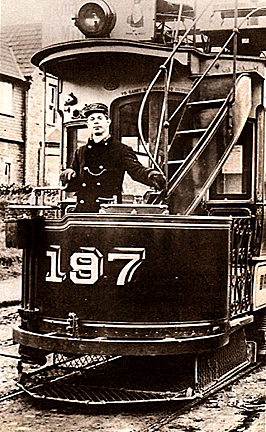 “Don’t
Talk to the Motorman,” said the sign at the front of every trolley. This
plus the clang of the bell, the grind of traction motors and the clatter
of wheels as they rolled over staggered rail joints and through the
complicated switch and crossing work prevailing at many intersections
endeared the trolley to several generations of riders. “Don’t
Talk to the Motorman,” said the sign at the front of every trolley. This
plus the clang of the bell, the grind of traction motors and the clatter
of wheels as they rolled over staggered rail joints and through the
complicated switch and crossing work prevailing at many intersections
endeared the trolley to several generations of riders.
During the great years of the era, the trolley car was to the average
family what the automobile and the station wagon are today. It carried
the head of the household between home and work six days of the week.
Husband and wife rode it downtown every Saturday afternoon on the weekly
shopping tour. The whole family rode it to church Sunday morning.
People used the trolley to visit relatives or just to go for a ride.
Children, particularly those in rural areas, rode the trolley to school;
and most companies sold weekly school passes good for a certain number
of rides at a substantial saving in fare. Dad took the trolley to the
ball park. Sunday school classes went on trolley car picnics. Businesses
held an annual trolley car outing for their employees.
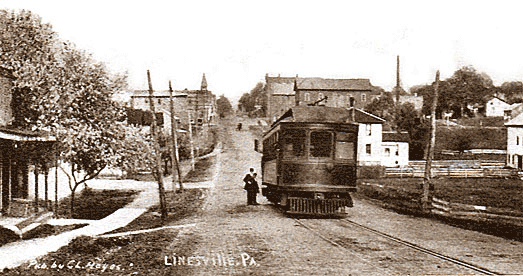
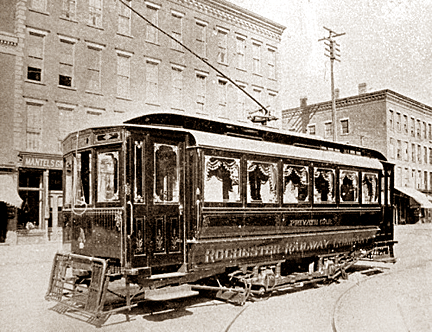 And,
of course, the deceased went on that final ride to the cemetery aboard
one. By today's standards it was slow, but in its time and place it
provided a useful service and performed its job with amazing convenience
and economy. And,
of course, the deceased went on that final ride to the cemetery aboard
one. By today's standards it was slow, but in its time and place it
provided a useful service and performed its job with amazing convenience
and economy.
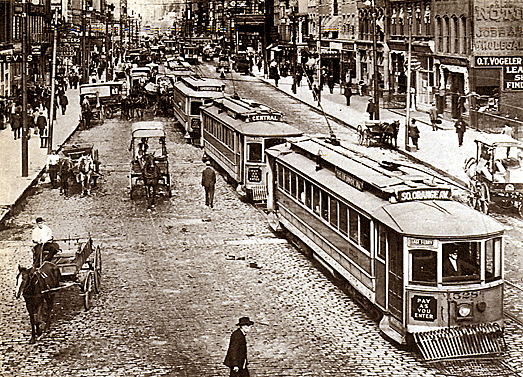
By the turn of the century more than 30,000 trolleys glided along15,000
miles of electrified track in the U.S. Between 1890 and the start of
World War I, U.S. cities and their network of electric railways both
expanded at an astonishing rate. So many trolley lines wound through the
streets of Brooklyn that the local baseball team became known as the
Trolley Dodgers, later shortened to Dodgers.
THE EARLY YEARS
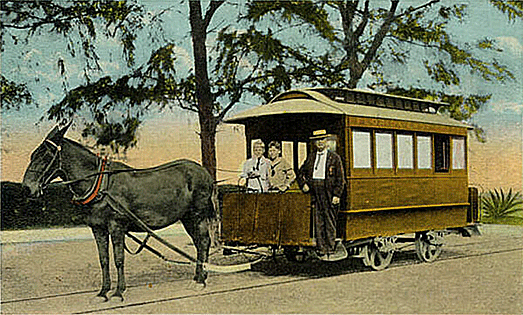
No one person invented the trolley. Rebuilt from horsecars, the earliest
electrics were uncertain vehicles. The impetus for power came after a
flu killed many horses, halting service.
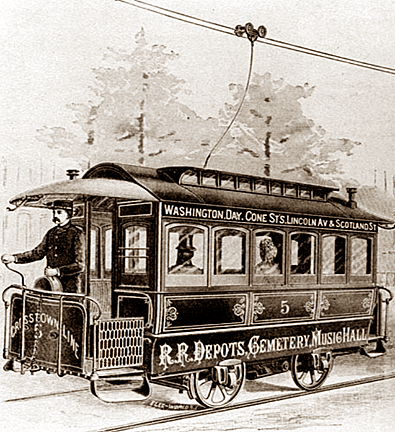 Some
inventors mounted the motor on the front platform, so that nothing was
more natural than to christen the electrician standing beside it a
"motorman." The first electric cars were unreliable, creating hissing
phone lines, bursting water and gas pipes, and electrocuting cats and
dogs. But since flimsy horsecar platforms showed a tendency to shake to
pieces under this load, they soon moved the motor down near the wheels.
Speeds were low, perhaps eight or nine miles an hour when all went well. Some
inventors mounted the motor on the front platform, so that nothing was
more natural than to christen the electrician standing beside it a
"motorman." The first electric cars were unreliable, creating hissing
phone lines, bursting water and gas pipes, and electrocuting cats and
dogs. But since flimsy horsecar platforms showed a tendency to shake to
pieces under this load, they soon moved the motor down near the wheels.
Speeds were low, perhaps eight or nine miles an hour when all went well.
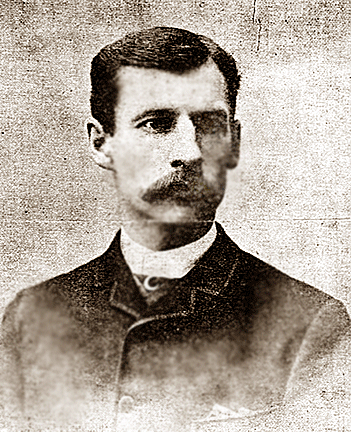
A man named Leo Daft invented a system employing two overhead wires,
strung side by side, on which there ran a toy-sized cart or dolly known
as a “troller” or trolley. Flexible wires dangled from the dolly to the
car beneath, which towed it along. However, the Daft system proved
troublesome since the troller kept falling off the wire and landing with
a terrifying crash on the car roof. Consequently, Daft cars tended to
leak in heavy rains causing passengers to keep their umbrellas raised
inside.
Daft used crude fuses to save the motors from overloading, but these
fuses could let go with a brilliant yellow flash and a deafening bang,
sending passengers out through the windows.
 Word
got around about how trolleys "forced electricity into the ground,"
subjecting water pipes to a destructive corrosion called electrolysis.
It was also widely rumored that the blue sparks flashing from trolley
poles were injurious to eyesight. Word
got around about how trolleys "forced electricity into the ground,"
subjecting water pipes to a destructive corrosion called electrolysis.
It was also widely rumored that the blue sparks flashing from trolley
poles were injurious to eyesight.
Despite tremendous difficulties, a young Annapolis graduate named Frank
Sprague built a 12-mile, 40-car line in Richmond, Virginia, which began
service on February 2nd, 1888. Since both its size and survival were
unprecedented, it quickly attracted the attention of horsecar officials
all over North America. Soon, scores of similar lines appeared signaling
the birth of the electric traction era.
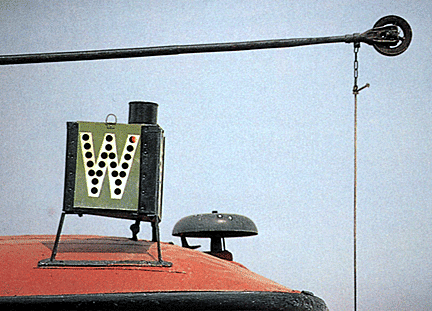 Sprague
used and improved the now familiar trolley pole instead of the 'troller'
for power collection and designed a mounting for the motors that kept
the gearing between them and the road wheels in constant mesh. He also
showed that reversing the motors would slow the cars and bring them to a
halt safely. Sprague connected his trolley pole to a fold-down mechanism
for passing under bridges or through tunnels. Sprague
used and improved the now familiar trolley pole instead of the 'troller'
for power collection and designed a mounting for the motors that kept
the gearing between them and the road wheels in constant mesh. He also
showed that reversing the motors would slow the cars and bring them to a
halt safely. Sprague connected his trolley pole to a fold-down mechanism
for passing under bridges or through tunnels.
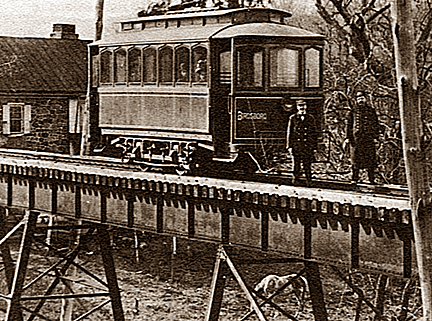 Street
railway patronage set new records every month, and cars grew in size in
order to accommodate the riders. Street
railway patronage set new records every month, and cars grew in size in
order to accommodate the riders.
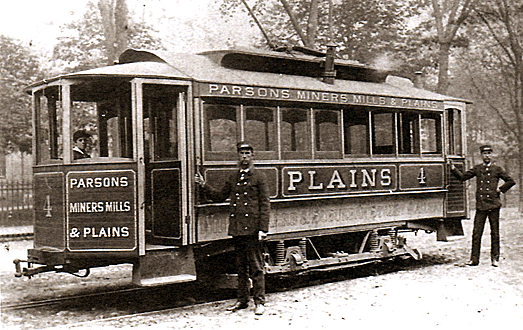
As the four-wheel, single-truck car reached its longest, practical
length, manufacturers developed a double-truck, eight-wheel car, almost
twice the length of the single-truck vehicle.
These larger cars weren’t only a boon to the heavily trafficked lines,
they were faster and performed better on the open-track work prevailing
on the suburban routes than on the paved city streets.
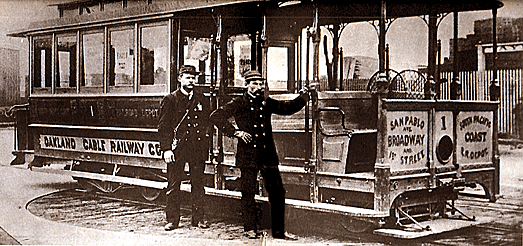
In the beginning, the cities needed electric traction transportation.
Just moving the masses of urban dwellers between home and work severely
taxed the existing horse and cable car systems, because both methods of
propulsion imposed strict limitations on the weight and size of the
individual passenger vehicle as well as on its speed of operation.
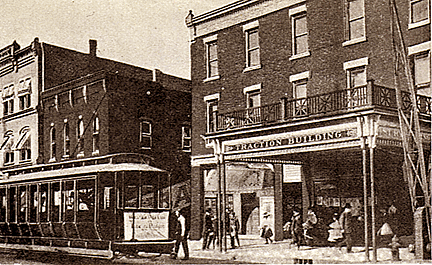 Neither
method of propulsion offered even token promise for solving the gigantic
transportation problem that was looming inevitably in urban areas. The
sudden and unexpected perfection of a workable and economically feasible
electric trolley came just in the nick of time. As the industry rapidly
grew and matured, the trolley became part of the fabric of everyday
life. Neither
method of propulsion offered even token promise for solving the gigantic
transportation problem that was looming inevitably in urban areas. The
sudden and unexpected perfection of a workable and economically feasible
electric trolley came just in the nick of time. As the industry rapidly
grew and matured, the trolley became part of the fabric of everyday
life.
On most lines, even in the smaller cities, car came along every few
minutes. On busier routes and in the larger cities one always seemed to
be in sight. During the morning and evening rush hours, headways, the
interval of time between cars, were measured in inches than in minutes,
for companies pressed every car capable of turning a wheel into service
to cope with the peak loads.
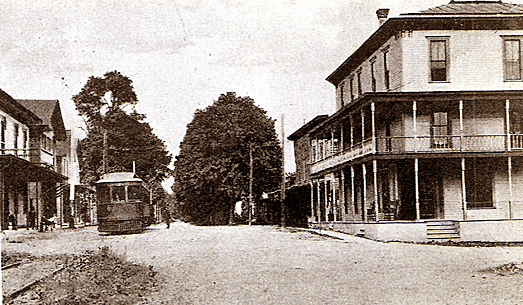
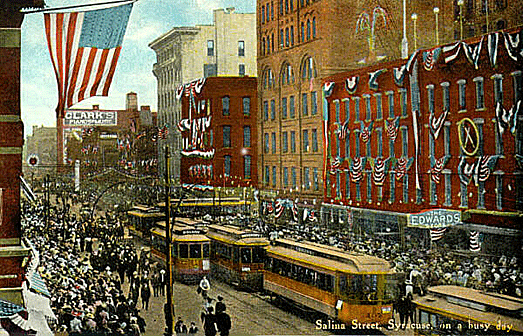
Small towns built systems as short as a mile in length. And big cities
built systems with hundreds of miles of track. Suburbs grew up all
around larger cities because of reliable, all-weather trolley
transportation. Trolleys were everywhere and took people everywhere they
wanted to go.
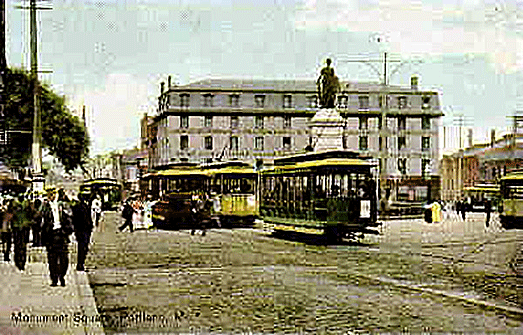
At first, a different company owned almost every line. So passengers
paid an additional fare each time they changed cars. Around the turn of
the century, a wave of consolidation swept most cities with just one or
two big streetcar companies owning all the routes. These companies soon
discovered that by issuing free transfers between lines, more than
enough additional riders would take the cars to make up for the fares
lost. Ridership soared.
TROLLEY RIDERS
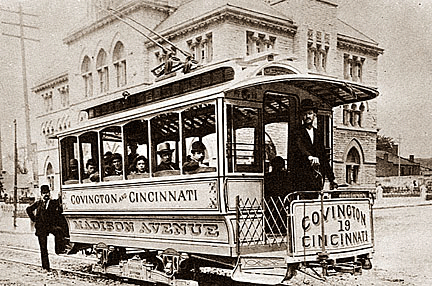 The
first trolley riders exhibited a noticeable air of bravado. Men would
hand their pocket watches to their stay-behind womenfolk because the
powerful electric currents flowing invisibly about a car might magnetize
them. The
first trolley riders exhibited a noticeable air of bravado. Men would
hand their pocket watches to their stay-behind womenfolk because the
powerful electric currents flowing invisibly about a car might magnetize
them.
Some riders joked about how in 1888 New York State had decided to
electrocute murderers. Riders believed it prudent to disembark hastily
if a thunderstorm sprang up. On some lines it was a regular practice to
stop and pull-down trolley poles whenever thunder rumbled nearby.
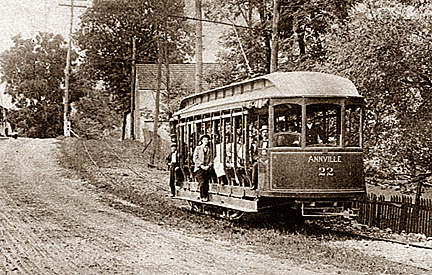 Scarcely
more than a decade after streetcar owners coaxed the first cautious
riders aboard the infant sparkers, real estate values soared near the
lines. When buying a house, people gave thought to whether it was within
easy walking distance of a trolley line. Scarcely
more than a decade after streetcar owners coaxed the first cautious
riders aboard the infant sparkers, real estate values soared near the
lines. When buying a house, people gave thought to whether it was within
easy walking distance of a trolley line.
On most small trolley lines, an endearing tradition of informality
existed, very different from the bleak impersonal feeling of big
railroads. When a regular rider didn't make it to the stop on time in
the morning, the motorman would dally while he or she came puffing up.
The daytime conductor could be bribed into delivering a parcel to a
house several blocks away or into dropping a letter in the slot at the
depot by a gift of some oven-fresh muffins.
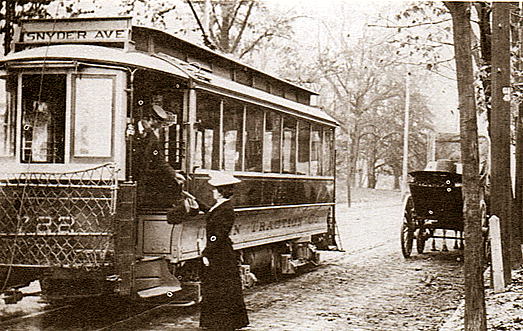
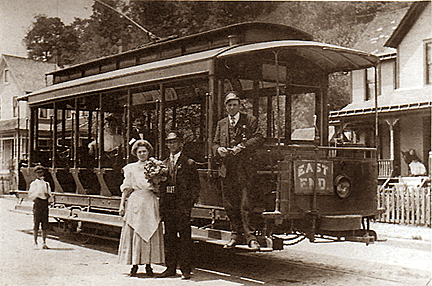
People could time the events of their domestic lives by the trolley's
regularity. A wife knew by the screech of the wheels on the curve down
the street at 5:45 PM that her husband was on his way home from work.
 Some
conductors developed delusions that a disproportionate number of men
carrying bass violins, two-man saws, rolls of barbed wire, and kegs of
fish fertilizer attempted to board their cars. When they succeeded, it
always seemed to develop that fat women would lurch crunchingly against
the bass viols, or that fragile, jury-appealing people would wound
themselves on wire or saw. Or that a grandmother would take one whiff of
the fish barrel and swoon at a lawyer's feet, developing lower-back pain
as she fell. Some
conductors developed delusions that a disproportionate number of men
carrying bass violins, two-man saws, rolls of barbed wire, and kegs of
fish fertilizer attempted to board their cars. When they succeeded, it
always seemed to develop that fat women would lurch crunchingly against
the bass viols, or that fragile, jury-appealing people would wound
themselves on wire or saw. Or that a grandmother would take one whiff of
the fish barrel and swoon at a lawyer's feet, developing lower-back pain
as she fell.
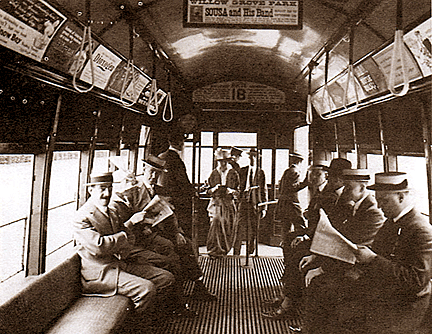
Ejection of unruly or nonpaying passengers proved to be a sore point on
most lines. According to the Motorman’s Handbook, ”No passenger shall be
forcibly ejected from a car for any cause whatsoever, unless the conduct
of the passenger is dangerous and grossly offensive.
No passenger will be ejected for mere intoxication, unless said
passenger becomes dangerous or offensive; such passenger must then be
ejected with great care, and must be guided until free from probable
injury. No passenger shall be put off at a. point where likely to be
exposed to danger.” Law suits were an everyday fact of life for
streetcar companies.
SPECIAL TROLLEYS
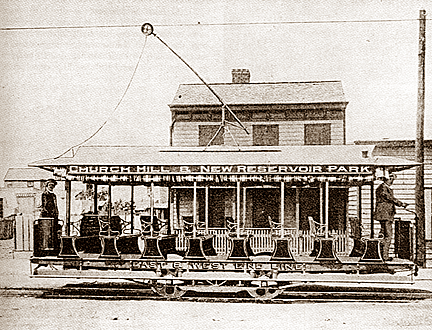 From
the earliest days on, open cars were the summertime favorites of the
trolley-riding public. Inherited from the horse and cable systems, it
became increasingly unpopular with railway managements; and after a few
years most companies wished it never had been invented. From
the earliest days on, open cars were the summertime favorites of the
trolley-riding public. Inherited from the horse and cable systems, it
became increasingly unpopular with railway managements; and after a few
years most companies wished it never had been invented.
Companies with open cars had to maintain two sets of equipment--one for
summer, one for winter. Furthermore, their basic construction, which
involved long transverse benches without a center aisle, presented a
problem of fare collection. Their seating capacity was tremendous; but
companies always said receipts rarely matched capacity, even during the
height of the summer season.
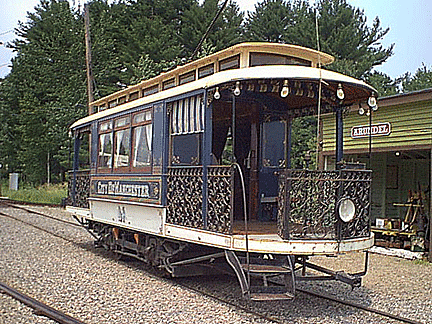 In
addition to the usual roster of open and closed passenger cars, the
typical street railway company owned a variety of specialized cars.
Originally intended for use by company officials on inspection trips,
parlor trolleys appeared quite widely in the 1890s. In
addition to the usual roster of open and closed passenger cars, the
typical street railway company owned a variety of specialized cars.
Originally intended for use by company officials on inspection trips,
parlor trolleys appeared quite widely in the 1890s.
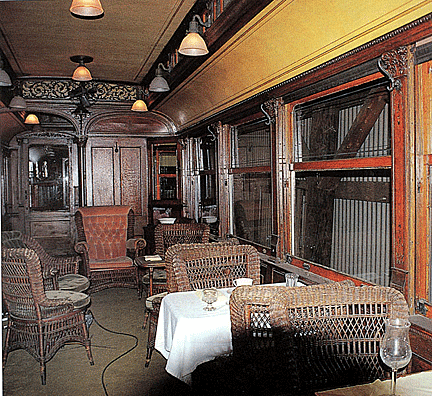
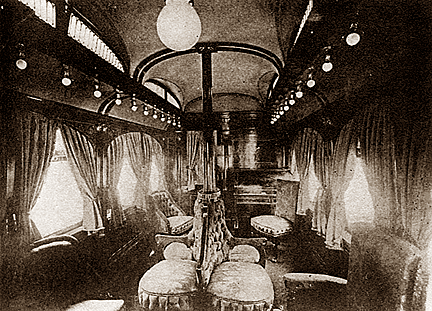
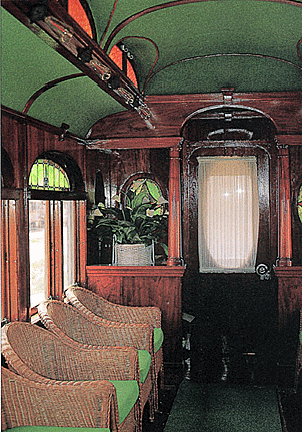
Generally luxurious, parlor-car trolleys gleamed with brass fittings,
richly curtained windows, wall-to-wall carpeting, decorated ceilings,
polished mahogany paneling, and colored glass in the clerestory. The
directors of the Connecticut Traction Company could avail themselves in
their car of a lavatory that was shielded from common gaze by stained
glass windows of almost paralyzing elegance.
 In
St. Louis, the private car Mabel not only had special lockers for china,
glassware, and linen, but also an icebox, sink, built-in desk, rich
portieres opalescent glass, and an overstuffed loveseat. In
St. Louis, the private car Mabel not only had special lockers for china,
glassware, and linen, but also an icebox, sink, built-in desk, rich
portieres opalescent glass, and an overstuffed loveseat.
In Manchester, New Hampshire, the directors' car had enough fancy
scrolled ironwork for a New Orleans building front. In Denver a parlor
car had a "tasteful ceiling of Paris green, with dark green border
ornamented in gold." This one also offered 16 rattan easy chairs, 8
glittering spittoons, and mother-of-pearl call buttons with which a
faint director could summon refreshment to his easy chair.
Even though originally built to enhance self esteem of officials, these
deluxe trolleys soon found additional service on charter trips. Many a
citizen would willingly plunk down $20 or $30 on spare-no-expense
occasions such as weddings or anniversaries so that he or she could
glide elegantly through the streets in publicly displayed privacy. Other
parlor-car occasions included fraternal affairs, bachelor dinners, and
special sightseeing tours for visiting dignitaries.
 Often, too, people chartered them for funerals. Many companies in the
larger cities had cars especially built for the purpose. Frequently
named instead of numbered, these cars provided a special casket
compartment up front with plate glass windows and a large glass door
that allowed the coffin to be viewed from the street; a nickel-plated
rail against which flowers could be banked; 8 black leather seats in the
casket compartment for first-degree mourners, and 24 seats in the rear
for lesser grievers. Often, too, people chartered them for funerals. Many companies in the
larger cities had cars especially built for the purpose. Frequently
named instead of numbered, these cars provided a special casket
compartment up front with plate glass windows and a large glass door
that allowed the coffin to be viewed from the street; a nickel-plated
rail against which flowers could be banked; 8 black leather seats in the
casket compartment for first-degree mourners, and 24 seats in the rear
for lesser grievers.
Smaller or less affluent lines used an ordinary combine car with the
usual baggage compartment at one end to hold the casket, and a passenger
section occupying the remaining two-thirds of the car for those
attending the funeral. Companies charged a moderate $20-26 for all these
somber but choice conveniences, a fee that included the services of a
neatly dressed motorman and conductor.
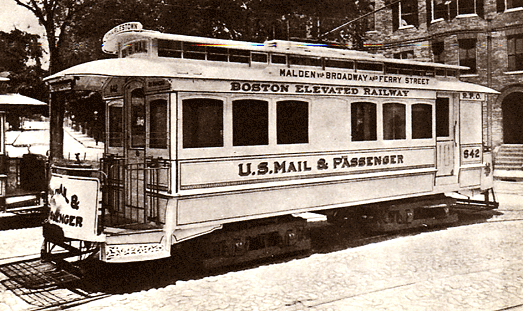
Postal cars operated on many of the larger systems. Painted red, white
and blue, these colorful cars ran over established routes on specific
schedules, picking up mail from corner boxes and transporting it to the
main post office. Like the familiar Railway Post Office cars, until
recently an inseparable part of every respectable passenger train, the
Post Office equipped the trolley versions with a mail slot on each side
in which letters could be deposited by the sender.
Electric traction, as the industry was known, reached its physical peak
during World
War I. Following that period, a gradual decline in the numbers of route
miles of track and cars operated began to appear. At first, the decline
was barely perceptible--here and there a small company tore up its rails
and pulled down its overhead wires. But mostly these were small,
marginal operations that never should have been built in the first
place.
Actually, trolley patronage continued to grow for another six years,
until 1923, when 14 billion riders paid to ride the streetcars of the
U.S. At the same time, the faster interurban cars began to take over the
former suburban routes.
As trolley companies began to shut down, they abandoned their trolleys.
Enterprising people put these retired trolleys to other uses, including
roadside restaurants, chicken coups, even a church.
<
Back
to More Back in Time
Next Article >
|