The first known use of such a
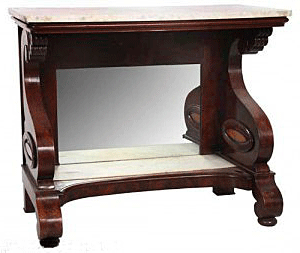
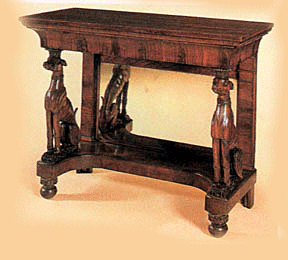
table was in 1765. During the Regency Period, a pier table had a mirror
mounted between its back legs against the wall, or sometimes above it. The purpose of the
mirror was to reflect the light around the room, not to check
petticoats.
Practically speaking, a woman wouldn’t be able to see her feet, let
alone fix her petticoat. The mirrors were often slightly angled towards
the ceiling in order to catch as much light as possible. The extensive
use of concave looking glasses in the 18th century and mirrors in the
19th century bounced the dim light from oil lamps around the room,
increasing overall brightness.
Pier
tables became status symbols of wealth. Reflecting light around a room
on highly-polished surfaces, including mirrors, glass, crystal pendants
on chandeliers, or fine wood surfaces, was a way of demonstrating
wealth. It dazzled the eye and demonstrated a great deal of labor from
servants who maintained that high degree of cleanliness.
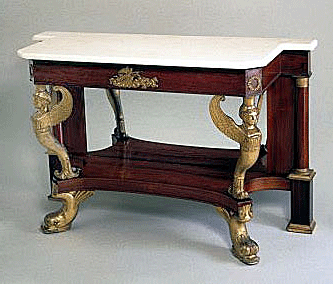
One of the greatest designers of pier tables was French ébéniste
Charles-Honoré Lannuier,
who emigrated in 1803 and became one of the leading furniture makers in
New York. Trained in Paris, he rose to fame during the American Federal
Period. After the Revolutionary War and War of 1812, anti-English
sentiment made French goods especially appealing to Americans. Lannuier
imported French pattern books to keep abreast of the latest Napoleonic
style. His work featured robustly carved and gilded caryatid supports,
carved dolphin feet, and elaborate gilt-bronze ormolu mounts. And while
not every wealthy person could afford a Lannuier pier table, his tables
reached the height of design excellence in the first two decades of the
1800s.



























 Docents
in historic houses always seem to have interesting stories about the
furniture in them. One of these concerns the pier table. Supposedly, a
woman could stop in front of it and check the mirror below it to see if her petticoat was
showing before going out. And although it makes a great story, the truth
is that women of the 19th century did no such thing. A woman of the time
wouldn’t have been caught dead adjusting her undergarments in a public
area of her house.
Docents
in historic houses always seem to have interesting stories about the
furniture in them. One of these concerns the pier table. Supposedly, a
woman could stop in front of it and check the mirror below it to see if her petticoat was
showing before going out. And although it makes a great story, the truth
is that women of the 19th century did no such thing. A woman of the time
wouldn’t have been caught dead adjusting her undergarments in a public
area of her house.