Antiquing in the
Sixties
by Bob Brooke
 Back
in the 1960s, most people didn’t go antiquing as they do today.
Collecting antiques was for those who could afford it. And the antiques
they collected were old, over 130 years old to be exact. After World War
II, most Americans were looking ahead. They didn’t want old things,
especially furniture. Back
in the 1960s, most people didn’t go antiquing as they do today.
Collecting antiques was for those who could afford it. And the antiques
they collected were old, over 130 years old to be exact. After World War
II, most Americans were looking ahead. They didn’t want old things,
especially furniture.
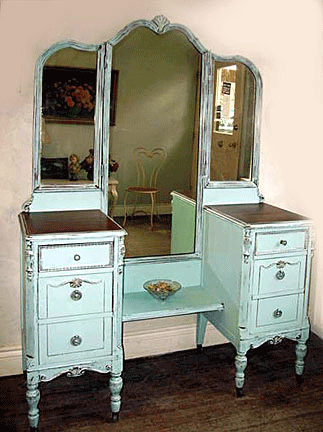
People who couldn’t afford actual antiques chose to up-cycle old pieces
to blend in with their new suburban lifestyle. And there was plenty of
old furniture to be had. The Great Depression left most people seeing
anything old as less than progressive. People considered pieces from the
last half of the 19th and early 20th centuries as used furniture that
could be bought for a song in thrift shops and used furniture stores.
 And
even those who could afford antiques turned to up-cycling to furnish
mountain cabins and seashore houses, both to live in and to rent. And
even those who could afford antiques turned to up-cycling to furnish
mountain cabins and seashore houses, both to live in and to rent.
ut these pieces had spent their remaining days in hot attics, damp
basements, and old barns. Not a good place for wood. Finishes were dirty
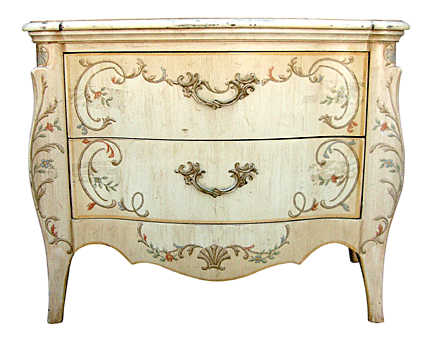
and often scratched. What to do? The answer was simple—antique them.
Antiquing in this sense meant painting over the old pieces to make them
look “old” and worn. Today, it’s called “up-cycling,” and it was all the
rage in the 1960s and 1970s.
In the 1960s, magazines like American Home had frequent articles showing
readers how to make tired old pieces look like new—not through
refinishing and restoration—but through painting. People transformed a
variety of old tables and wooden dining and kitchen chairs, vanities,
and sideboards into trendy pieces that brought charm to the simply
styled 60s and 70s interiors.
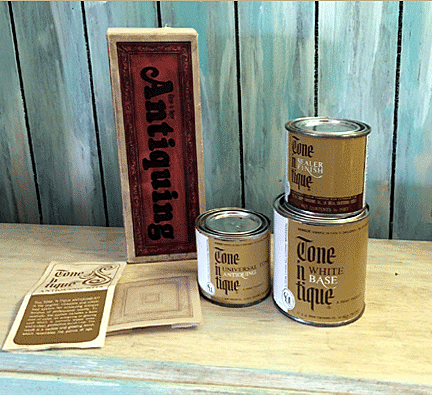 The
process was rather simple. Antiquing kits were all the rage. They
contained two cans of paint—one with a water base and one with an oil
base, actually an oil glaze. Each kit contained enough water base paint
to give a relatively large piece of furniture two coats and enough oil
glaze for one coat. Both types of paint came in contrasting colors
chosen by the kit manufacturer. This process didn’t give the same as the
"distressed" look of the 1980s and early 1990s. The
process was rather simple. Antiquing kits were all the rage. They
contained two cans of paint—one with a water base and one with an oil
base, actually an oil glaze. Each kit contained enough water base paint
to give a relatively large piece of furniture two coats and enough oil
glaze for one coat. Both types of paint came in contrasting colors
chosen by the kit manufacturer. This process didn’t give the same as the
"distressed" look of the 1980s and early 1990s.
The base colors in the kits came in a variety of hues—orange, red,
mustard, aqua, green, and so on. The base color came in a quart can and
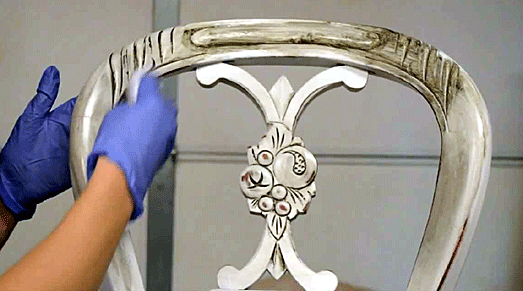
the glaze or translucent top coat in a pint can. After covering the
piece of furniture with the base coat and letting it dry, the user then
applied the glaze coat, wiping it off to the desired effect with the
cheesecloth that came with the kit. Being an oil base, the glaze didn’t
dry right away, allowing the user to work the paint until achieving the
desired “antique” results, accomplished by wiping the open surfaces to
produce “highlights” while allowing the glaze to remain in the cracks
and crevices in the carvings.
Unfortunately, a lot of really good antiques—dubbed old fashioned by
forward thinking homeowners—were ruined by antiquing them. It wasn’t
until the 1980s that restoring old furniture came into vogue. It was
then when both amateur and professional restorers discovered how
difficult it was to remove the antiquing paint that antiquing kits fell
out of favor.
<
Back to Caring for Your Collections
Archives
Next Article
>
|