This book was the primary authority on what was
proper, beautiful, efficient in all aspects of mid-19th-century
interior design. Originally published in 1868. Over 100
illustrations. More Books
Mark Twain
is one of only a few All-American writers. Unlike many
contemporary writers and those who followed him, he
wrote for the common man. He traveled and wrote about
places he visited with a sense of humor. In his books
and other writings, he illustrated Victorian life in
both fact and fiction. To learn more, read “Mark
Twain’s America.”
AN-TIQUE (an-teek)An object having
special value because of its age, especially a domestic item, piece of
furniture or decorative arts object esteemed for its artistry, beauty,
mechanical ingenuity, or period of origin.
The
Antiques Almanac, a five-edition-per-year online magazine for beginning and
intermediate antiques collectors and those just interested in finding out about
old things, is your first stop on the Web in your search for information
about antiques and collectibles. Here, you’ll find articles on a variety
of American and international antiques, including furniture, china,
glass, silver, and other decorative arts from the Colonial, Empire,
Victorian, Art Nouveau, and Art Deco Periods, plus vintage and modern
collectibles, interesting historical facts, antique tips, and
recommendations for caring for your collections. Come back often to see
what's new. And be sure to tell your friends about us.
This
edition's
theme:
"Roman Arts and Culture"
Volume 18 No. 1
This edition features articles about
the arts and culture of the Roman Empire.
In all the articles in this edition dates will depict either BCE (Before
the Christian Era - formerly BC) and CE (Christian Era - formerly AD).
Back to the
Classics The Romans based
their furniture on earlier models that the Greeks based on
mathematically expressed laws of proportion that they
applied not only to buildings as a whole but also to much of
their interior decoration.
Ancient Pottery for
Everday Use
For
everyday use, the ancient Romans relied on sturdy terracotta
vessels which they produced in large quantities to serve
people in the far reaches of the Empire. Unlike the Greeks
and the Etruscans, the Romans didn’t produce decorative
ceramics.
Innovation in Glass
Glass, especially functional and decorative glass vessels,
was a part of everyday life in the Roman Empire. Artisans
experimented with glass-making techniques and applied
innovation to take the art of glass-making even further.
Glass shifted from a luxury item to everyday object, yet
retained its decadence.
Useful Works of Art
Back before wallpaper,
carpeting, and paintings on canvases, the Romans used
mosaics to decorate and enhance the interiors of their homes
and public buildings Not only were their mosaics beautiful
works of art, but they were also an invaluable record of
everyday items, such as clothes, food, tools, weapons, flora
and fauna. They also revealed much about Roman activities
like gladiator contests, sports, agriculture, hunting, and
sometimes they even captured the Romans, themselves, in
detailed and realistic portraits.
Brooches, Bracelets, Rings, and More The ancient
Romans, both men and women, loved to adorn themselves with
gold, colored gemstones and glass. The ancient Greeks, on
the other hand, preferred fine quality metalwork in gold or
silver. Most Romans were highly conscious of how they
presented themselves in public. Both men and women
frequently used body ornamentation to demonstrate their
wealth, power, influence, and knowledge.
Preserving Antiquities
Collecting
antiquities can be an expensive undertaking. Even the smallest artifacts
sell for three figures or more. Therefore, it’s imperative to care for
them in the best possible way to preserve the investment.
Statues and monuments of Roman citizens chronicled the
history of the Empire. The ancient Romans combined military
might with a commitment to public art, which served as both
political propaganda and a means to commemorate military and
diplomatic achievements.
The
Metropolitan Museum of Art in New York, otherwise known as the MET, has
one of the greatest collections of Roman antiquities in the United
States. Strolling through the galleries of Roman antiquities is like
stepping back to a time over two millennia ago. Read more.
The daily life
of Roman citizens depended on their status in society. And
nowhere has revealed more about everyday life than the
remains of Herculaneum, an ancient Roman town in modern-day
Ercolano, Italy, buried by volcanic ash and pumice during
the catastrophic eruption of Mount Vesuvius. Read more
Cameos first appeared as far back as 15,000 BCE. where ancient
Egyptian civilizations carved figures into rocks to record important
events. Cameo artistry traveled between the ancient Mediterranean
cultures through trade routes connecting Egypt, Greece, and Rome,
and often depicted mythological themes while paying tribute to gods
and goddesses. As the Roman Empire grew, cameo carvers began to
incorporate political portraits into their pieces. Read more
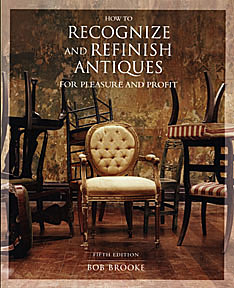
How to Recognize and
Refinish Antiques for Pleasure and Profit
Have
you ever bought an antique or collectible that was less than perfect and
needed some TLC? Bob's book offers tips and step-by- step
instructions for simple maintenance and restoration of common antiques.
Read an
Excerpt
BREAKING
NEWS
French bidders battle for rare ‘real
gold’ medal from Paris Exposition 1900
A remarkable solid gold
medallion created for the Paris Exposition Universelle in
1900 turned up at Jacobs & Hunt Auctions in Liss, Hampshire,
England. A local couple had brought it in together with some
inherited diamond jewelry